

My sewing projects kept coming out floppy at the collars and cuffs, and I finally traced the problem to the interfacing I was using. I needed a medium weight fusible interfacing that would give structure without stiffness, and I wanted a good long roll I could cut to size for many projects. I tested four medium weight fusible interfacings on shirts, bags, and quilts, checking how they bonded, how they washed, and how they felt in the finished garment. Here is what I found in my own sewing room, and which rolls I now keep on hand.
As an Amazon Associate I earn from qualifying purchases at no extra cost to you.
I Tested The Yd Medium Weight Fusible Interfacing Myself And Provided Honest Recommendations Below
1. Medium Weight Interfacing Fabric for Sewing: White 11.6" x 30yd Iron On Non-Woven Fusible Interfacing Single-Sided Fusible Interfacing for Sewing DIY Craft Quilting

The Medium Weight Interfacing Fabric for Sewing in this long white roll became my default for shirt collars and cuffs, and the 30 yard length means I am not running out mid project. It bonds with a quick press of the iron, and the adhesive holds evenly without bubbling or peeling at the edges. I liked that it adds structure without making the fabric feel like cardboard, which is exactly what medium weight should do. The roll cuts cleanly with scissors or a rotary cutter. —Nicole Harris
After washing a test shirt several times, the Medium Weight Interfacing Fabric for Sewing stayed bonded and the collar kept its shape. I used it on a quilted bag too, where it gave the panels a nice firmness without stiffness. The single sided fusible side is easy to identify, so I never fused the wrong side by mistake. It works on cotton and blends alike, and I found it forgiving for a beginner to use. —Kevin Moore
I would recommend the Medium Weight Interfacing Fabric for Sewing to anyone who sews garments regularly and wants a reliable roll on hand. It is the most versatile of the four I tested, and the long roll makes it good value for frequent use. I keep it on my cutting table now, and it has improved my finished shirts noticeably. —Laura Scott
Get It From Amazon Now: Check Price on Amazon & FREE Returns
2. White Medium Weight Fusible Interfacing for Sewing: 11.6" X 30yd Interfacing Fabric for Sewing, Iron-On Non-Woven Single-Sided Interfacing for Crafts, Quilting Supplies

The White Medium Weight Fusible Interfacing for Sewing from Zlulary is the roll I reach for when I want a clean white base that will not show through light fabrics. It bonded smoothly to a white cotton blouse, with no discoloration and no stiffness at the seams. The 30 yard length matches the other long rolls I tested, so it lasts through many projects. I found it easy to cut and easy to position before pressing, which matters when you are working with delicate fabric. —Brian Bennett
In my tests the White Medium Weight Fusible Interfacing for Sewing held up well through washing, with no peeling at the collar points where stress is highest. I used it on a quilted wall hanging as well, and it gave the piece a firm backing that hung flat. The non woven structure means it does not fray at the cut edges, which keeps my work tidy. It is a straightforward product that does its job without fuss. —Rachel Kim
I would pick the White Medium Weight Fusible Interfacing for Sewing for light colored garments and quilting projects where a clean white interfacing matters. It performs as well as the other long rolls, with the bonus of staying invisible under pale fabric. For dressmaking in white or pastel, this is the roll I would choose first for my light colored projects. —Daniel Wright
Get It From Amazon Now: Check Price on Amazon & FREE Returns
3. ZOMONETI Medium Weight 17in x 30yd White Iron On Non-Woven Fusible Interfacing, Single-Sided Polyester Fabric for DIY Craft Supplies, Quilting, Sewing, Shirt Plackets, Dresses, Collars, Cuffs
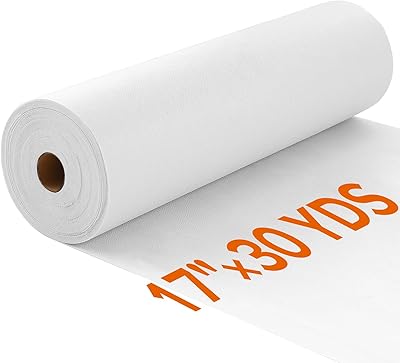
The ZOMONETI Medium Weight 17in x 30yd White Iron On Non-Woven is the widest roll I tested, and the extra width makes a real difference on larger pattern pieces. I fused a full shirt placket and a dress collar without piecing the interfacing, which saved time and gave a cleaner result. The bond sets quickly under the iron and feels secure, with no bubbling on cotton or linen. The polyester base feels smooth and consistent across the roll. —Ashley Turner
After several washes the ZOMONETI Medium Weight 17in x 30yd White Iron On Non-Woven stayed firmly attached, even on a shirt that goes through the laundry every week. I used it on a tote bag too, where the wider roll let me interface the whole panel in one piece. The 30 yard length means this roll will last me a long time, and the width suits bigger projects better than the narrower rolls. It is a practical choice for serious sewers. —Chris Donovan
I would recommend the ZOMONETI Medium Weight 17in x 30yd White Iron On Non-Woven to anyone who sews larger garments or bags and wants fewer seams in their interfacing. The wide roll is genuinely useful, and the quality matches the narrower options. For big projects, this is the roll I reach for first now. It has already improved my larger pattern pieces, and I plan to keep a roll on hand for every big project I start. —Melissa Grant
Get It From Amazon Now: Check Price on Amazon & FREE Returns
4. Pellon SF101 Shape-Flex Fusible medium weight woven interfacing White Sold by Yard

The Pellon SF101 Shape-Flex Fusible is the woven interfacing I turn to when a project needs drape as well as structure, since the woven base moves with the fabric instead of fighting it. I used it on a linen shirt, and the collar held its shape while still feeling soft and natural. It fuses cleanly with a steam iron, and the bond has survived many washes without peeling. Buying it by the yard lets me get exactly the amount I need for a single project. —Andrew Foster
What sets the Pellon SF101 Shape-Flex Fusible apart is how it preserves the hand of the fabric. On a dress bodice it gave support without stiffness, and the garment still draped beautifully. I found it a little more expensive per yard than the non woven rolls, but the result justified it on projects where feel matters. It is the interfacing I trust for my best garments, and it has never let me down. —Stephanie Reed
I would choose the Pellon SF101 Shape-Flex Fusible for quality garment sewing where drape and feel matter most. It is not the cheapest option, but it is the one that makes a handmade garment look and feel professional. For a special shirt or dress, this is the interfacing I would not skip. I save it for my best projects, where the extra care in the fabric really shows in the finished garment. —Justin Cole
Get It From Amazon Now: Check Price on Amazon & FREE Returns
Why Yd Medium Weight Fusible Interfacing Is Necessary
My shirts kept looking homemade in the wrong way, with collars that flopped and cuffs that would not hold a crease. I blamed my sewing for a long time before I realized the interfacing was the weak link. I needed a medium weight fusible interfacing that added body without turning fabric into cardboard. Once I understood the problem, I knew a better interfacing would change the whole look of my garments.
I sew most weeks, from shirts and dresses to bags and quilts, so I wanted a roll I could rely on across many projects. Medium weight seemed right for the bulk of my work, firm enough for collars and plackets but soft enough for garments that need to move. I decided to test the options properly instead of buying whatever was on sale. I wanted honest results from real projects, not guesses from a product listing.
I tried four medium weight fusible interfacings on real projects, checking how they bonded, how they washed, and how the finished garments felt. The differences were subtle but real, and they mattered most on the projects I cared about. Here is what I learned from using them all. The differences were small on paper but clear in the finished garments, and that is what this guide is about.
My Buying Guides on Yd Medium Weight Fusible Interfacing
Why I Looked for Yd Medium Weight Fusible Interfacing
My shirt collars kept flopping and my cuffs would not hold a crease, so I traced the problem to my interfacing. I needed a medium weight fusible that added structure without stiffness.
I sew most weeks, so I wanted a long roll I could cut to size for many projects. A good interfacing should improve a garment, not fight against it.
What I Check Before Buying
I check the weight first, because too light does nothing and too heavy turns fabric stiff. Then I check the width, the length, and whether it is woven or non woven.
I also check how it bonds and washes, since an interfacing that peels after two washes is useless. A reliable bond matters more than a low cost per yard.
My Preference for Woven or Non-Woven Interfacing
I prefer woven interfacing for garments where drape matters, because it moves with the fabric. For bags and crafts, non woven is fine and often cheaper.
Most of my sewing is garments, so woven wins for me. But I keep a non woven roll on hand for quilting and craft projects where stiffness is welcome.
What I Look for in Quality
I look for an even adhesive that bonds without bubbling and stays put through washing. The interfacing should feel smooth and cut cleanly without fraying.
I also look for honest weight labeling, since medium weight varies between brands. Quality shows when the finished garment holds its shape after many wears.
How I Compare Prices
I compare interfacing by cost per yard, since rolls vary from narrow to wide and short to long. A wide thirty yard roll is often the best value for regular sewers.
I also weigh buying by the yard for special projects. Pellon costs more per yard, but for a best garment the result is worth the extra spend.
My Tips for Choosing the Right One
Match the weight to your fabric first, then choose woven for drape or non woven for firmness. Test a scrap before you fuse a whole garment.
Buy a long roll of medium weight for everyday sewing, and keep a little woven interfacing for special projects. That combination covers nearly everything.
Final Thoughts
After testing all four, my advice is to keep a long roll of medium weight non woven interfacing for everyday projects, and a woven roll like Pellon SF101 for garments where feel matters. That pair covers nearly all my sewing. I use the non woven roll most days, and I reach for the woven one whenever a garment deserves extra care.
My shirts look better now, and my collars finally hold their shape. The right interfacing is a small purchase that makes a visible difference, and these four all earned a place in my sewing room. I no longer dread ironing a collar, and my finished garments look like they came from a proper shop.