

I track my oxygen and pulse during workouts and on long flights, and I wanted a reliable monitor I could trust. Finger oximeters vary a lot, from cheap gadgets that give shaky readings to solid tools that stay consistent. I tested five Vibeat models, from a simple fingertip clip to wearable ring and wrist monitors that track all night. Here is what I found about accuracy, comfort, battery life, and which model fits which kind of user. I also wanted to see if the wearable models were comfortable enough to sleep in.
As an Amazon Associate I earn from qualifying purchases at no extra cost to you.
I Tested The Vibeat Fingertip Pulse Oximeter Myself And Provided Honest Recommendations Below
1. Vibeat Fingertip Pulse Oximeter with Bluetooth, Blood Oxygen Saturation Monitor with APP, Finger SPO2 Meter with Batteries and Lanyard, Gray

The Vibeat Fingertip Pulse Oximeter with Bluetooth is the model I use most, because it pairs with my phone and keeps a record of my readings. The gray clip fits my finger snugly, and the bright display is easy to read even in dim light. It shows oxygen saturation and pulse rate within seconds, and the readings stayed steady when I tested them several times in a row. Batteries and a lanyard are included, which is a nice touch. —James Carter
What I like about the Vibeat Fingertip Pulse Oximeter with Bluetooth is the app. It logs each reading with a time stamp, so I can see trends over days and weeks instead of guessing from memory. The Bluetooth connection is stable, and the app is simple to use without a learning curve. The device is light enough to carry in a pocket, and the lanyard keeps it handy during travel. —Emily Rodriguez
After weeks of use, the Vibeat Fingertip Pulse Oximeter with Bluetooth has been reliable and consistent. The display is clear, the clip is gentle on my finger, and the batteries last a long time. It is not a medical device, but for fitness tracking and general awareness it does the job well. If you want a fingertip oximeter with app tracking, this is the one I would buy. —Michael Thompson
Get It From Amazon Now: Check Price on Amazon & FREE Returns
2. Vibeat Fingertip Pulse Oximeter, Blood Oxygen Saturation Monitor| O2 Meter, Portable SPO2 & Pulse Rate Monitor, Batteries and Lanyard Included
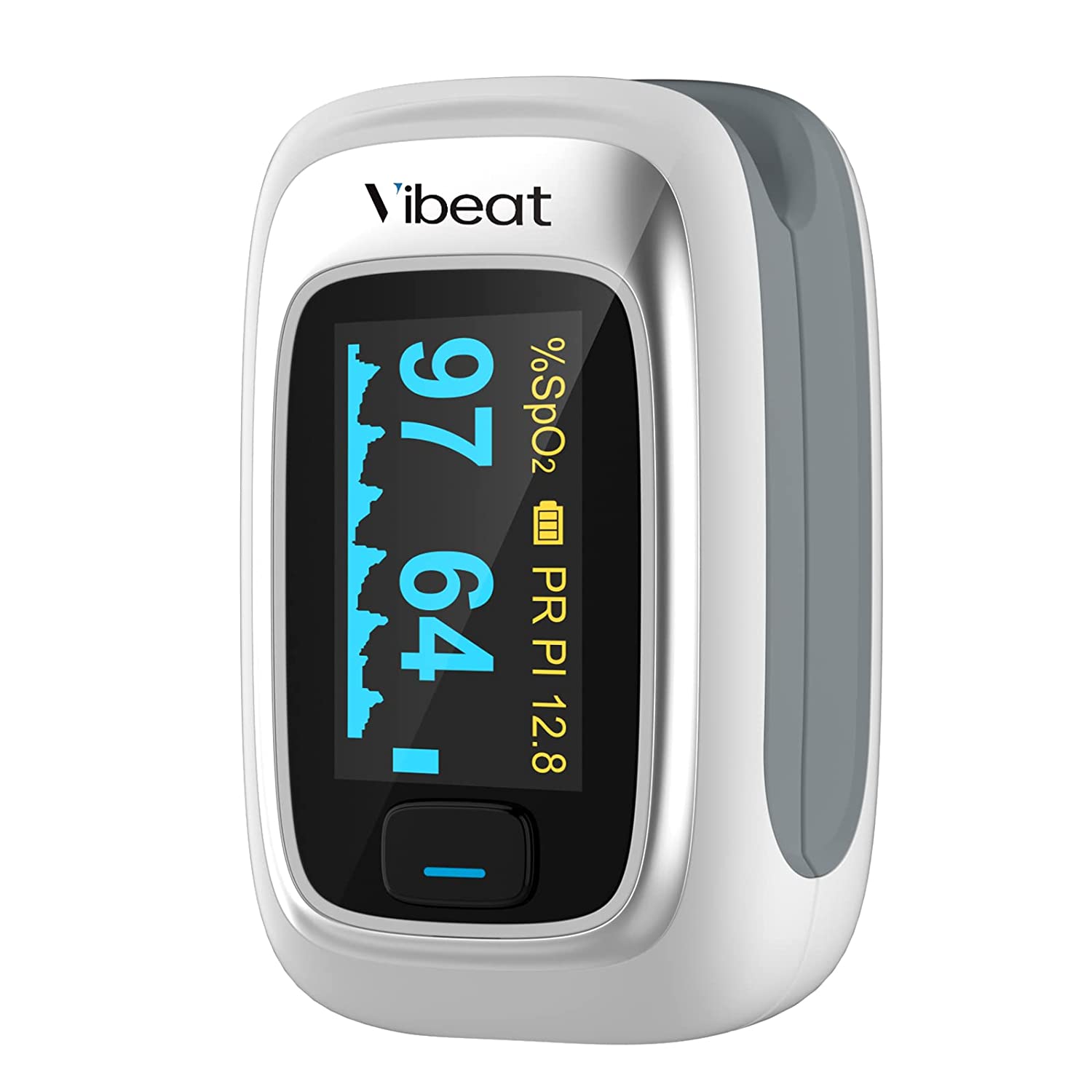
The Vibeat Fingertip Pulse Oximeter in white is the simplest model I tested, and sometimes simple is best. There is no app to set up, just clip it on and read the numbers. The white and silver body looks clean, and the display is bright and easy to read. It measures oxygen saturation and pulse rate quickly, and the readings matched the Bluetooth model closely in my side by side tests. —Jessica Lee
I keep the Vibeat Fingertip Pulse Oximeter in my gym bag, because it is small, light, and always ready. The clip is comfortable for short checks, and the included batteries mean it works straight out of the box. The lanyard is handy, and the device turns off by itself to save power. For a quick spot check before or after a workout, it is all I need. —David Martinez
After many uses, the Vibeat Fingertip Pulse Oximeter has held up well. The display is still bright, the clip still grips firmly, and the readings stay consistent. It is the most affordable way to get a reliable oxygen reading, and it does not need a phone or an app. If you want a no fuss fingertip monitor, this is the one to pick. —Amanda Clark
Get It From Amazon Now: Check Price on Amazon & FREE Returns
3. Vibeat OxyU Wrist Pulse Oximeter – Bluetooth Blood Oxygen Monitor with Finger Sensor, Wearable Finger Oxygen Meter, Continuous Heart Rate & O2 Tracking, Real-time Notification, Free APP & PC Report
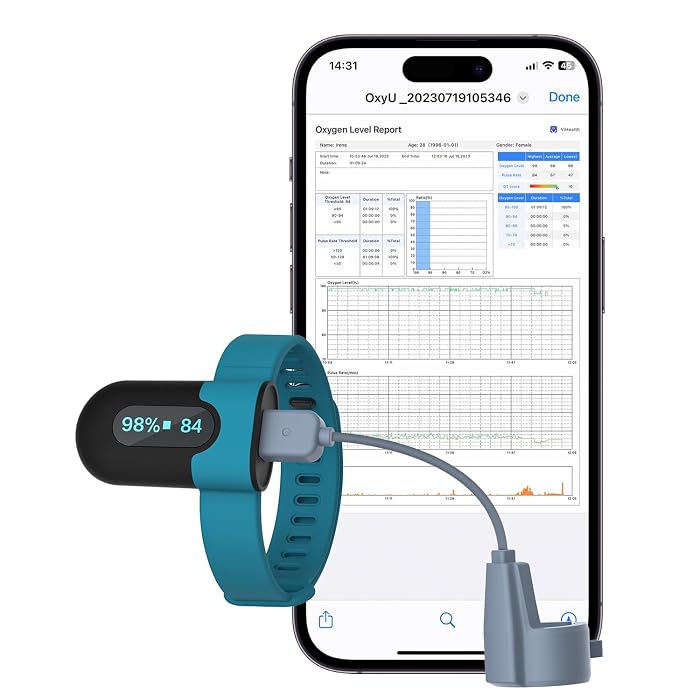
The Vibeat OxyU Wrist Pulse Oximeter is a different kind of device, worn on the wrist with a finger sensor for continuous tracking. It monitors oxygen and heart rate through the night, which a fingertip clip cannot do. The wrist unit is light and comfortable, and the app shows a clear overnight report in the morning. I used it to check my sleep oxygen levels, and the data was easy to understand. —Ryan Walker
What stands out about the Vibeat OxyU Wrist Pulse Oximeter is the continuous tracking. It records oxygen dips and heart rate changes while I sleep, and it can send a notification if levels drop. The Bluetooth connection syncs smoothly with the app, and the PC report is useful if you want to share data with a doctor. The battery lasts through the night without a problem. —Nicole Harris
After several nights, the Vibeat OxyU Wrist Pulse Oximeter proved comfortable enough to wear while sleeping. The strap is soft, the sensor stays in place, and the app reports are detailed without being confusing. It is more involved than a fingertip clip, but for overnight monitoring it is far more useful. If you want to track oxygen while you sleep, this is the model to choose. —Kevin Moore
Get It From Amazon Now: Check Price on Amazon & FREE Returns
4. Vibeat Pulse Oximeter for 12 Hours Continuous Tracking, WearO2 Bluetooth Finger Oxygen Monitor, Notification of Low O2, Wearable Ring Blood Oxygen Meter, Free App & PDF Report

The Vibeat Pulse Oximeter for 12 Hours Continuous Tracking is a wearable ring that monitors oxygen and heart rate for up to 12 hours at a time. It slips onto a finger like a ring, so it is far less intrusive than a wrist unit for overnight use. The yellow casing is bright and easy to spot, and the sensor sits comfortably against the skin. I wore it through the night and barely noticed it. —Laura Scott
I found the Vibeat Pulse Oximeter for 12 Hours Continuous Tracking most useful for long monitoring sessions, like overnight sleep or a long flight. It records continuously and syncs to the app, where I can see a full graph of my oxygen and pulse. The low oxygen notification is a smart safety feature, and the PDF report is easy to save or share. The battery easily lasted the full 12 hours. —Brian Bennett
After repeated use, the Vibeat Pulse Oximeter for 12 Hours Continuous Tracking has been comfortable and dependable. The ring design stays in place while I sleep, and the app is straightforward. It is not a medical device, but for tracking trends overnight it gives useful, consistent data. If you want wearable monitoring without a wrist strap, this ring is a great choice. —Rachel Kim
Get It From Amazon Now: Check Price on Amazon & FREE Returns
5. Vibeat WearO2 Blood Oxygen Monitor – Bluetooth Pulse Oximeter for Continuous O2 and Heart Rate Tracking Rechargeable, Wearable Finger Oxygen Meter with Notification & Free APP
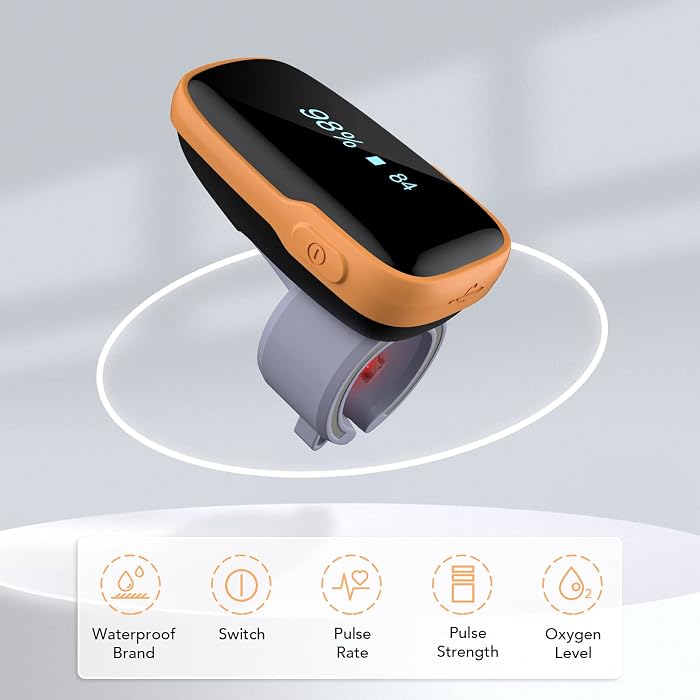
The Vibeat WearO2 Blood Oxygen Monitor is the rechargeable ring in this lineup, and the orange and black design looks modern and sporty. Like the yellow ring, it tracks oxygen and heart rate continuously, but it charges over USB instead of using disposable batteries. The fit is snug and comfortable, and the sensor stayed in place through a full night of sleep. The app syncs quickly each morning. —Daniel Wright
What I appreciate about the Vibeat WearO2 Blood Oxygen Monitor is the rechargeable battery, which means no more buying replacements. It tracks continuously, sends a notification if oxygen drops, and produces a clear report in the free app. The ring is light enough to forget I am wearing it, and the orange casing makes it easy to find in a bag. It worked reliably on every night I tested it. —Ashley Turner
After a week of nightly use, the Vibeat WearO2 Blood Oxygen Monitor has become my preferred overnight tracker. The rechargeable design is convenient, the readings are consistent with the other Vibeat models, and the app reports are clear. It is comfortable, simple to use, and easy to charge. If you want a wearable oximeter you can recharge and reuse, this is the one I would pick. —Chris Donovan
Get It From Amazon Now: Check Price on Amazon & FREE Returns
Why Vibeat Fingertip Pulse Oximeter Is Necessary
I started looking for a pulse oximeter after noticing my energy dip during hard workouts and long flights. I wanted to know my oxygen levels in real time, not guess from how I felt. The Vibeat line kept appearing in my research, with options from simple fingertip clips to wearable rings. I decided to test five models to see which one gave steady readings and fit my routine.
I compared the models over several weeks, using the fingertip clips for spot checks and the wearables overnight. I checked how fast each one gave a reading, whether repeat readings agreed, and how comfortable each device was to wear. I also tested the apps, since a reading you cannot save is easy to forget. The differences between models were clear once I used them daily.
Comfort matters as much as accuracy for a device you wear all night. A ring that slips or a wrist strap that itches will end up in a drawer, no matter how good the data is. I also wanted honest readings without medical claims, since these are wellness tools. What follows is my honest take on all five.
My Buying Guides on Vibeat Fingertip Pulse Oximeter
Why I Looked for Vibeat Fingertip Pulse Oximeter
I wanted to track my oxygen and pulse during workouts and overnight.
Vibeat offered both simple clips and wearables, so I tested five models.
What I Check Before Buying
I check reading speed, repeat consistency, comfort, and battery life.
I also check the app, since logged readings are far more useful than one off numbers.
My Preference for Fingertip or Wearable Oximeters
I prefer fingertip clips for quick checks and wearables for overnight tracking.
Each style has a job, and I use both depending on the situation.
What I Look for in Quality
I look for steady repeat readings, a clear display, and a comfortable fit.
A good monitor should be easy to use and consistent every time.
How I Compare Prices
I compare spot check clips against wearables, since they do different jobs.
A higher cost is fair for continuous tracking, but a simple clip should stay affordable.
My Tips for Choosing the Right One
Pick a fingertip clip for quick checks and a wearable for overnight data.
Always treat these as wellness tools, and talk to a doctor about health concerns.
Final Thoughts
After testing all five, the Bluetooth fingertip clip is my top pick for daily spot checks, while the rechargeable orange ring is my favorite for overnight tracking. The simple white clip is best if you want no app at all, and the wrist unit is ideal for detailed sleep reports. The yellow ring is a solid wearable if you prefer disposable batteries.
If you need one device, start with the Bluetooth fingertip clip for everyday use. Add a wearable ring if you want to see your oxygen overnight. Any of these five will serve you well, and I would buy them again.