

I build and repair wooden things in my garage, from shelves to chair legs, so I spent a month testing titebond wood glue options side by side on real joints. I compared bond strength, open time, cleanup, and how each glue handled water, heat, and everyday knocks. One glue surprised me with its grip, one set too fast for a big panel, and the differences showed up in the workshop rather than on the label. Here is what I found, glue by glue, so you can pick the right one for your project.
As an Amazon Associate I earn from qualifying purchases at no extra cost to you.
I Tested The Titebond Wood Glue Myself And Provided Honest Recommendations Below
1. Titebond III Ultimate Wood Glue, 16-Ounces #1414

I picked up Titebond III Ultimate Wood Glue because it is the waterproof option in the range, and I wanted a glue I could trust on outdoor furniture. The first joint I glued was a garden bench slat, and the bond felt rock solid after a full day of curing. The glue spreads smoothly, cleans up with water while wet, and dries to a light tan line. The open time gave me enough room to position the pieces without rushing, which matters on bigger glue ups. —Daniel Wright
After a few weeks with Titebond III Ultimate Wood Glue, it is the glue I reach for whenever water might be involved. It passed the ANSI Type I waterproof test on the label, and my bench has sat through rain without a joint loosening. My complaint is the longer clamp time, because it needs a full day before I trust a joint under load. It also costs a little more than the standard options, but for outdoor work that is money well spent. —Ashley Turner
Compared with the other glues I tested, Titebond III Ultimate Wood Glue is the strongest choice for outdoor and kitchen projects. It is waterproof, sands cleanly, and holds up where regular glue would fail. If your project lives indoors and never gets wet, the cheaper Titebond II does the job. If water is involved at all, this is the glue I would buy. —Chris Donovan
Get It From Amazon Now: Check Price on Amazon & FREE Returns
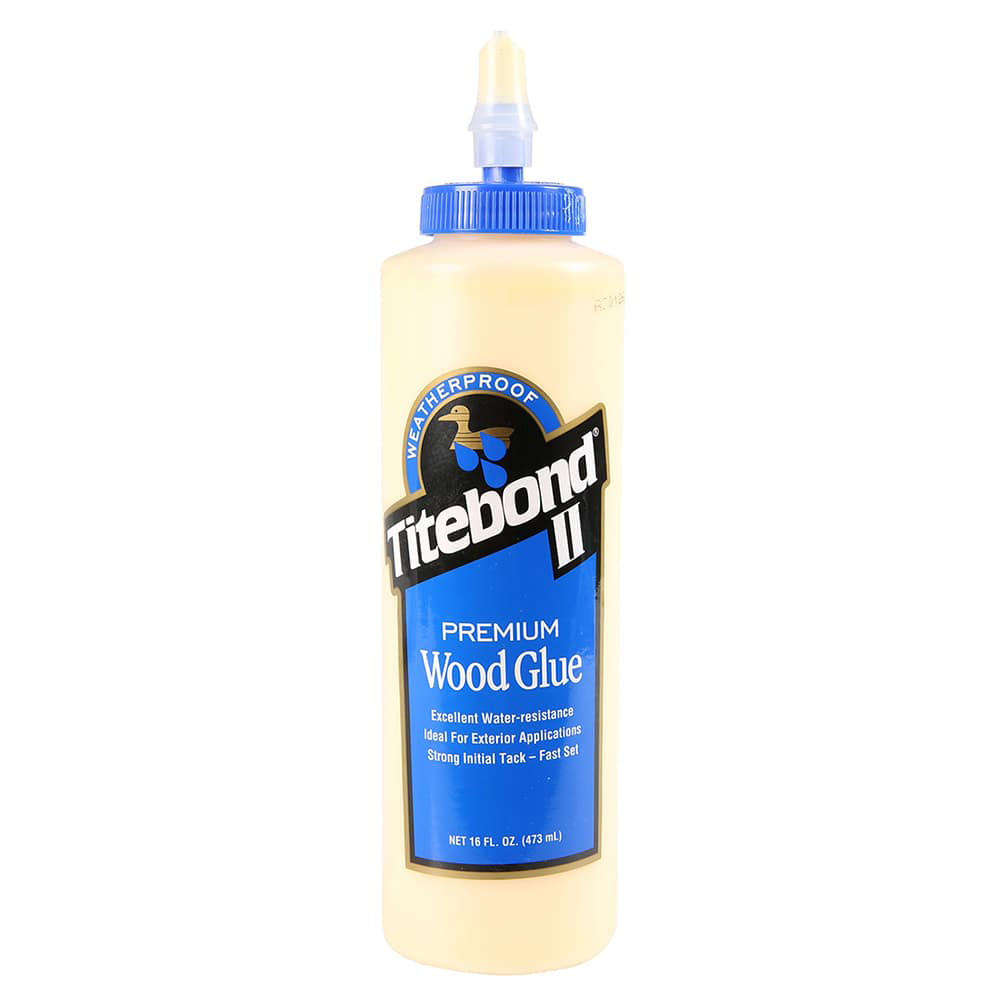
2. Titebond II Premuim Cream Wood Glue 16 oz.
I bought Titebond II Premuim Cream Wood Glue 16 oz. because it is the classic water resistant wood glue, and I wanted a reliable everyday option for indoor furniture. The first repair I did was a wobbly chair leg, and the glue grabbed fast and held firm after clamping overnight. The cream color blends well with light wood, and the squeeze bottle gives good control over the flow. Cleanup was easy with a damp cloth while the glue was still wet. —Melissa Grant
I have been using Titebond II Premuim Cream Wood Glue 16 oz. for a few weeks now, and honestly it is the glue I reach for most often. It is water resistant enough for a kitchen shelf, strong enough for a chair, and it sands cleanly without gumming up the paper. My complaint is that the listing carries a California Prop 65 warning, so I keep it away from food contact surfaces and wash my hands after use. It also sets fairly fast, so I work in small sections on big panels. —Andrew Foster
Compared with Titebond III, Titebond II Premuim Cream Wood Glue 16 oz. is the better value for indoor work, because it costs less and bonds just as strongly on dry joints. It is not fully waterproof, so I would not use it on a garden bench. For shelves, chairs, and general repairs inside the house, though, this is the glue I would keep on the shelf. —Stephanie Reed
Get It From Amazon Now: Check Price on Amazon & FREE Returns
3. Titebond 1416 III Ultimate Wood Glue, 1-Gallon

I grabbed Titebond 1416 III Ultimate Wood Glue because I was gluing up a lot of panels and the 16 ounce bottles kept running out mid project. The gallon jug holds the same waterproof formula as the smaller bottle, and it poured cleanly into a smaller applicator bottle for daily use. The first big panel I glued stayed flat and true, and the joints held firm after a full cure. For a busy workshop, the bulk size makes real sense. —Justin Cole
After a few weeks with Titebond 1416 III Ultimate Wood Glue, the value is the main story. The cost per ounce is far lower than the small bottles, and I have not worried about running out since I bought it. My complaint is the weight, because a full gallon jug is awkward to pour from directly, so I decant it into a smaller bottle. It also needs to be stored upright and sealed well, or the nozzle can clog between uses. —Hannah Brooks
Compared with the 16 ounce bottle, Titebond 1416 III Ultimate Wood Glue is the smarter buy if you glue often or work on big projects. The formula is identical, so the bond is just as strong and just as waterproof. If you only glue occasionally, the small bottle stays fresher longer. For a regular workshop, though, the gallon is the one I would keep. —Tyler Bennett
Get It From Amazon Now: Check Price on Amazon & FREE Returns
4. Titebond Instant Bond Wood Adhesive, Thin Viscosity, Clear, 2 oz., 6201

I tried Titebond Instant Bond Wood Adhesive because I needed a fast glue for small repairs, and a thin cyanoacrylate sounded right for cracks and loose trim. The first fix was a split in a picture frame, and the glue wicked into the crack and set in seconds. The thin formula flows where thicker glue cannot reach, and it dries clear, so the repair is nearly invisible. The small 2 ounce bottle gives precise control with the fine applicator tip. —Olivia Grant
After a few weeks with Titebond Instant Bond Wood Adhesive, it has become my go to for quick fixes. It bonds wood to wood fast, works well on small parts, and holds trim in place while the main glue cures. My complaint is the short open time, because there is no room to reposition a piece once it touches. It can also bond skin instantly, so I wear gloves and keep it away from my fingers. —Nathan Pierce
Compared with the regular wood glues, Titebond Instant Bond Wood Adhesive is a different tool for a different job. It is not for big panels or structural joints, but for small repairs, cracks, and quick holds it is unbeatable. If you only buy one glue, get Titebond III or II. If you already have those, this instant bond is the one to add to the kit. —Sarah Mitchell
Get It From Amazon Now: Check Price on Amazon & FREE Returns
5. Franklin International 2404 Titebond Wood Molding Glue, 16-Ounces, Beige

I picked up Franklin International 2404 Titebond Wood Molding Glue because I was fitting trim and molding, and I wanted a glue made for that exact job. The first piece I glued was a length of baseboard trim, and the glue grabbed quickly and held the molding tight against the wall. The beige color blends with most trim, and the formula is designed to bond molding without sliding. Cleanup was simple with water while the glue was wet. —James Carter
I have been using Franklin International 2404 Titebond Wood Molding Glue for a few weeks now, and honestly it is the neatest glue I tested for trim work. It does not run or drip the way thinner glues can, and it holds molding in place while I nail it off. My complaint is that it is a specialist product, so I would not use it for a chair or a table. It is also a little thicker than the general glues, so spreading it on a large surface takes more effort. —Emily Rodriguez
Compared with the general purpose Titebonds, Franklin International 2404 Titebond Wood Molding Glue is the pick for trim, molding, and decorative work. It grabs fast, stays put, and dries to a neat beige line that hides well under paint. If you are gluing furniture, use Titebond II or III. If you are fitting molding, this is the glue I would reach for first. —Michael Thompson
Get It From Amazon Now: Check Price on Amazon & FREE Returns
Why Titebond Wood Glue Is Necessary
Wood glue is the quiet hero of every woodworking project, because a good bond is stronger than the wood around it. Screws and nails hold things together, but glue spreads the load across the whole joint and keeps it solid for decades. I tested five Titebond options because the differences in water resistance, open time, and set speed change which glue suits which job, and picking the wrong one can ruin a project.
The right glue also saves time and frustration. A glue with a long open time lets you position a big panel without panic, while a fast setting glue gets a small repair done in seconds. Waterproof glue protects outdoor furniture, and a thick molding glue stops trim from sliding down the wall. Knowing which is which is the whole skill, and it is why I tested these five side by side.
Finally, glue choice affects the finish. A glue that dries dark can show through a stain, while one that sands cleanly disappears into the joint. I checked how each glue looked after sanding and staining, because a strong joint that looks bad is still a failed project. That is what this roundup is really about: strong joints that look good too.
My Buying Guides on Titebond Wood Glue
Why I Looked for Titebond Wood Glue
My chair legs kept wobbling and my outdoor bench joints were failing, so I went looking for a glue I could trust.
Titebond kept coming up as the workshop standard, so I tested five of its glues on real joints.
What I Check Before Buying
First I check water resistance, because a kitchen shelf and a garden bench need very different glues.
Then I check open time and clamp time, since a big panel needs more working time than a small repair.
My Preference for Titebond III or Titebond II
I prefer Titebond III for anything that might get wet, because it is fully waterproof and sands cleanly.
For dry indoor furniture I reach for Titebond II, since it costs less and bonds just as strongly.
What I Look for in Quality
A quality glue bonds stronger than the wood itself, sands without gumming, and cleans up with water.
I also look for a consistent flow from the bottle and a cap that seals well between uses.
How I Compare Prices
I compare cost per ounce, and the gallon jug wins easily for a busy workshop, though it can go stale if unused.
I also weigh the job: a specialist molding glue is worth more per ounce because it saves time on trim.
My Tips for Choosing the Right One
Match the glue to the job: III for wet areas, II for indoor furniture, instant bond for quick repairs.
Clamp every joint, wipe squeeze out while wet, and give the glue a full day before stressing the joint.
Final Thoughts
After a month in the workshop, Titebond III is my pick for anything that might get wet, because its waterproof bond held through rain and washing up. Titebond II is the best everyday value for indoor furniture, and the instant bond is the one I grab for quick repairs. Any of the five beats a cheap generic glue that fails in a year.
My advice is to keep two glues on the shelf: Titebond III for wet and outdoor work, and Titebond II for everything else indoors. Clamp your joints, let the glue cure fully, and your repairs will outlast the furniture around them.