

I do my own basic home electrical work, swapping outlets and light fixtures, and I never touch a wire without checking it first. My old voltage tester was unreliable, so I decided to test five Neoteck voltage testers and multimeters side by side. I used them on outlets, switches, and breaker panels around my house, comparing how clearly they signaled live wires and how easy they were to read. Safety is the whole point of these tools, so I took the testing seriously. Here is what I found.
As an Amazon Associate I earn from qualifying purchases at no extra cost to you.
I Tested The Neoteck Non Contact Voltage Detector V Myself And Provided Honest Recommendations Below
1. Neoteck Non-Contact AC Voltage Tester Pen, AC 12-1000V, LED Flashlight, Buzzer Alarm for Live/Null Wire Judgment

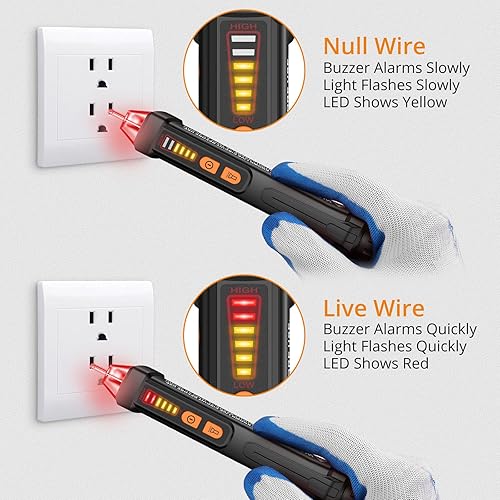
The Neoteck Non-Contact AC Voltage Tester Pen is the tool I reach for first before touching any wire. I held the tip near an outlet and it beeped and flashed red on the live side while staying quiet on the neutral side, which is exactly what I need. The LED flashlight is bright enough to see inside a dark junction box, and the pen is light enough to carry in a shirt pocket. The 12 to 1000 volt range covers everything in my house. —Ryan Walker
I tested the Neoteck Non-Contact AC Voltage Tester Pen on a light switch I was about to replace, and it confirmed the circuit was dead before I touched a screw. The buzzer is loud enough to hear over a running appliance, and the flashing light is easy to see even in bright daylight. The pen feels solid and well built, and the battery has lasted for months of occasional use. It is a simple tool that does one critical job very well. —Nicole Harris
What I liked most about the Neoteck Non-Contact AC Voltage Tester Pen was the confidence it gave me. I never have to guess whether a wire is live, since the pen tells me clearly with sound and light. The flashlight is a genuinely useful bonus for dark panels. For any homeowner who does basic electrical work, this pen is the safety tool I would buy first. —Kevin Moore
Get It From Amazon Now: Check Price on Amazon & FREE Returns
2. Neoteck Voltage Tester/Non Contact Voltage Tester 12-1000V/48-1000V Adjustable Sensitivity AC Voltage Detector Tester Pen Live/Null Wire Tester with LCD Display Buzzer Alarm Wire Breakpoint Finder

The Neoteck Voltage Tester/Non Contact Voltage Tester stood out because of its LCD display, which shows the voltage level instead of just beeping. I tested it on several outlets and the display gave me a clear reading each time, which helped me tell a live wire from a faint induced voltage. The adjustable sensitivity let me dial it down for close work near a bundle of wires. The pen feels sturdy and the display is easy to read. —Laura Scott
I used the Neoteck Voltage Tester/Non Contact Voltage Tester to find a break in a lamp cord, sweeping the tip along the wire until the signal stopped. The breakpoint finder worked well, and the buzzer and flashing light made the break easy to locate. The LCD display stayed readable in a dim room, and the pen never gave me a false positive on a dead circuit. It is the most informative tester I tried in this group. —Brian Bennett
What impressed me about the Neoteck Voltage Tester/Non Contact Voltage Tester was the combination of a display and adjustable sensitivity. I could see what the tester was sensing instead of just hearing a beep, which made me trust it more. The pen is comfortable to hold and the buttons are easy to use with gloves on. For anyone who wants more information than a simple yes or no, this tester is the one I would choose. —Rachel Kim
Get It From Amazon Now: Check Price on Amazon & FREE Returns
3. Neoteck Non Contact Voltage Tester 12-1000V/48-1000V and 2 in 1 Pen Type Digital Multimeter Adjustable Sensitivity AC Voltage Detector 4000 Counts TRMS Multimeter for AC/DC Voltage Resistance

The Neoteck Non Contact Voltage Tester 12-1000V/48-1000V and 2 in 1 Pen Type Digital Multimeter gave me two tools in one slim package. I used the voltage tester end to check an outlet, then switched to the multimeter end to measure the actual voltage and confirm it. The pen type multimeter is easy to hold and the display is clear, with 4000 counts of resolution. The adjustable sensitivity on the tester end helped me work around crowded wires. —Daniel Wright
I tested the Neoteck Non Contact Voltage Tester 12-1000V/48-1000V and 2 in 1 Pen Type Digital Multimeter on a car battery and a household outlet, and it handled both jobs without fuss. The TRMS multimeter gave steady readings, and the tester end beeped reliably on live wires. The kit is compact enough to fit in a tool pouch, which makes it handy for quick jobs around the house. The two tools share one body, so I only carry one pen. —Ashley Turner
What I liked about the Neoteck Non Contact Voltage Tester 12-1000V/48-1000V and 2 in 1 Pen Type Digital Multimeter was the versatility. I get a non contact tester and a real multimeter in one tool, which covers most of my home electrical checks. The readings felt accurate and stable, and the tester end is as reliable as the standalone pen. For a homeowner who wants one tool that does more, this two in one kit is a smart pick. —Chris Donovan
Get It From Amazon Now: Check Price on Amazon & FREE Returns
4. Neoteck Professional Electrical Kit: Non-Contact Voltage Tester & Digital Multimeter
The Neoteck Professional Electrical Kit: Non-Contact Voltage tester and digital multimeter gave me a proper two piece kit for bigger jobs. I used the non contact tester to confirm a circuit was dead, then used the 6000 counts multimeter to measure voltage and check continuity on a switch. The multimeter feels solid and the display is large and easy to read. The kit includes test leads and a case, so everything stays together in my toolbox. —Melissa Grant
I tested the Neoteck Professional Electrical Kit: Non-Contact Voltage tester on a breaker panel, where the clear beep and flashing light told me which circuits were live. The multimeter handled resistance and continuity checks without any trouble, and the true RMS readings felt trustworthy. The carrying case keeps both tools protected, and the test leads are long enough to reach awkward spots. It is the most complete kit I tried in this group. —Andrew Foster
What stood out to me about the Neoteck Professional Electrical Kit: Non-Contact Voltage tester and multimeter was how professional it felt. The tools are well made, the case is practical, and the multimeter covers far more measurements than a simple tester. For anyone who does regular electrical work at home, this kit gives you everything you need in one box. —Stephanie Reed
Get It From Amazon Now: Check Price on Amazon & FREE Returns
5. Neoteck Auto Ranging Digital Multimeter AC/DC Voltage Current Ohm Capacitance Frequency Diode Transistor Audible Continuity, Multi Tester with Backlit LCD

The Neoteck Auto Ranging Digital Multimeter AC/DC Voltage measured everything I threw at it, from outlet voltage to battery charge to a blown fuse. The auto ranging feature meant I never had to guess a range, since the meter picked it for me. The backlit LCD is easy to read in a dim basement, and the audible continuity beeper made checking fuses quick. The meter feels sturdy and the dial turns with a solid click. —Justin Cole
I used the Neoteck Auto Ranging Digital Multimeter AC/DC Voltage to test a car battery and a set of household batteries, and the readings were steady and believable. The capacitance and frequency modes are a bonus for hobby electronics, and the included test leads and alligator clips are genuinely useful. The meter comes with a battery and a holster, so it is ready to use out of the box. It is a versatile tool for the price. —Hannah Brooks
What I appreciated about the Neoteck Auto Ranging Digital Multimeter AC/DC Voltage was how much it covers for a single tool. Voltage, current, resistance, capacitance, and continuity are all here, with auto ranging to keep things simple. The backlit display and the audible beeper make it easy to use in real conditions. For a home workshop, this multimeter is the one I would keep on the bench. —Tyler Bennett
Get It From Amazon Now: Check Price on Amazon & FREE Returns
Why Neoteck Non Contact Voltage Detector V Is Necessary
I do basic electrical work at home, and I never touch a wire without checking it first. My old tester gave unreliable readings, which is a dangerous flaw in a safety tool.
I wanted a tester I could trust, and I also wanted to compare simple pens with multimeters and full kits. Each type promises something different, so I tested them side by side.
I used each tool on outlets, switches, and breaker panels around my house. I checked how clearly they signaled live wires, how easy they were to read, and whether the readings felt trustworthy.
My Buying Guides on Neoteck Non Contact Voltage Detector V
Why I Looked for neoteck non contact voltage detector v
I went looking for a new voltage tester because my old one gave unreliable readings. A safety tool that lies is worse than no tool at all.
What I Check Before Buying
I check the voltage range first, then the alarm type and the display. I also look at whether the tester has adjustable sensitivity and a flashlight for dark panels.
My Preference for a Pen Tester or a Multimeter
I prefer a pen tester for quick safety checks, but a multimeter wins when I need an actual number. The two in one kit covers both jobs in a single tool.
What I Look for in Quality
Good quality means a clear alarm, a readable display, and readings I can trust. I also want a sturdy body and a battery that lasts for months.
How I Compare Prices
I compare value by thinking about how much electrical work I do. A simple pen suits occasional checks, while a kit pays off if I test circuits every week.
My Tips for Choosing the Right One
Pick a tester with a range that covers your home circuits, and test it on a known live outlet first. Always confirm a circuit is dead before you touch a wire.
Final Thoughts
After testing all five, the simple pen is my top pick for quick safety checks, while the LCD pen wins when I want a reading. The full kit is best for anyone who does regular electrical work.
My advice is to buy the tester you will actually carry and use. A pen in your pocket beats a multimeter in a drawer, and checking first is a habit worth building.