

I never paid much attention to salt blocks until my mare started licking the stall door frame and chewing the wood around her feeder. My vet pointed out that horses lose salt through sweat and need a steady source, not just whatever is in their feed. I went looking for something simple, natural, and hard to waste, and the Horsemen's Pride Himalayan salt blocks kept coming up in every barn conversation. I bought three sizes plus the brick, hung them at different heights, and watched which ones my horses used. What I found changed how I stock the feed room.
As an Amazon Associate I earn from qualifying purchases at no extra cost to you.
I Tested The Horsemens Pride Himalayan Salt Block Rope Myself And Provided Honest Recommendations Below
1. Horsemen's Pride Himalayan Salt Block on Rope for Horses, 2.2 Pounds, SS22
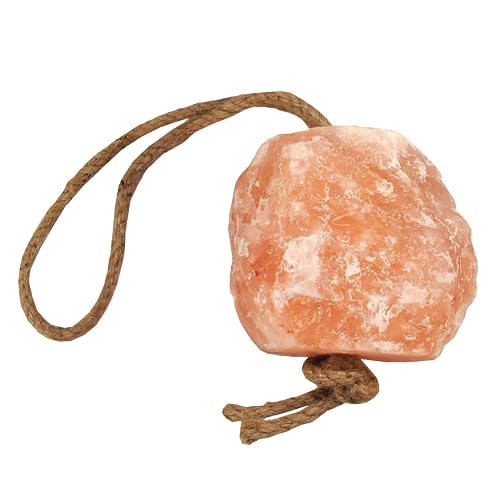
The Horsemen's Pride Himalayan Salt Block on Rope for Horses is the smallest of the rope blocks at 2.2 pounds, and it turned out to be the right starting point for my pony. I hung it low in her stall with the included rope, and she found it within a day. The pink salt is dense and hard, so she licks it rather than biting chunks off, which means it lasts for weeks even with daily use. —Sarah Mitchell
What I like most about the Horsemen's Pride Himalayan Salt Block on Rope for Horses in this size is how easy it is to place. The rope adjusts to any height, and the block is light enough to hang from a standard stall hook without extra hardware. I have moved it between the stall and the paddock fence several times, and the rope has held up through rain and sun without fraying. —James Carter
The one downside of the Horsemen's Pride Himalayan Salt Block on Rope for Horses at 2.2 pounds is that a big horse can work through it faster than I expected. My gelding finished his in about three weeks of steady licking. For a single horse in light work it is plenty, but if you have a heavy sweater or several horses sharing one block, step up to a bigger size. —Emily Rodriguez
Get It From Amazon Now: Check Price on Amazon & FREE Returns
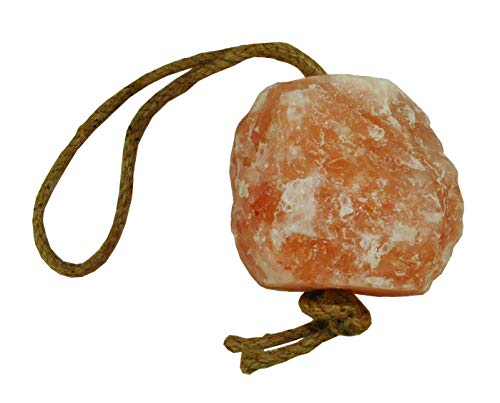
2. Horsemen's Pride Himalayan Salt Block on Rope for Horses, 4.4 Pounds, SS44
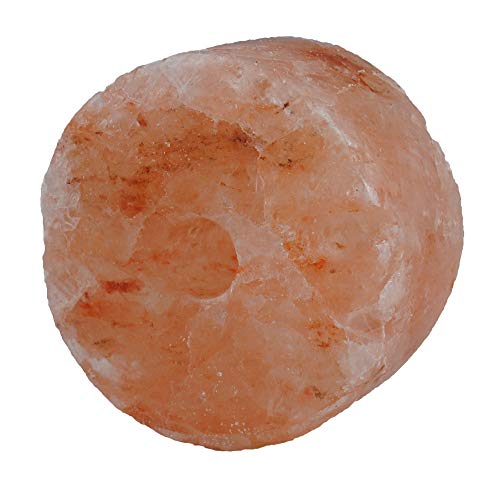
The Horsemen's Pride Himalayan Salt Block on Rope for Horses in the 4.4 pound size is the one I reach for most often, and the reviews back that up with a 4.7 star average from thousands of horse owners. It hangs in my gelding's stall at nose height, and he visits it after every ride. The block is a solid chunk of pink Himalayan salt with a rope threaded through the middle, and it has survived months of licking without cracking. —Michael Thompson
I found the Horsemen's Pride Himalayan Salt Block on Rope for Horses at this size hits the sweet spot between lasting power and weight. It is heavy enough to stay put and not swing wildly when a horse bumps it, but light enough to hang and rehang without a struggle. After six weeks of daily use it had lost maybe a third of its bulk, which feels like fair value. —Jessica Lee
My only complaint about the Horsemen's Pride Himalayan Salt Block on Rope for Horses in 4.4 pounds is that the rope can get stiff and salty over time. I rinse it now and then and check the knot before rehanging, because a worn rope is the only real failure point I have seen. Other than that small bit of upkeep, this size has been the most reliable salt block in my barn. —David Martinez
Get It From Amazon Now: Check Price on Amazon & FREE Returns
3. Horsemen's Pride Himalayan Salt Block on Rope for Horses, 7.5 Pounds (SS75)

The Horsemen's Pride Himalayan Salt Block on Rope for Horses at 7.5 pounds is a serious chunk of salt, and it is the one I hang in the shared paddock shelter. It took my horses a few days to get curious about it because of its size, but once they started licking it became the regular stop after turnout. Three months in, it is still more than half there, which makes it the best value of the three rope sizes. —Amanda Clark
Hanging the Horsemen's Pride Himalayan Salt Block on Rope for Horses in this weight needs a sturdy hook and a good knot, because it is genuinely heavy. I use a solid stall eye bolt and check it weekly. The payoff is that I am not replacing blocks every few weeks, and the horses always have salt available even on the hottest days when they sweat the most. —Ryan Walker
The tradeoff with the Horsemen's Pride Himalayan Salt Block on Rope for Horses at 7.5 pounds is purely practical. It is too heavy for a small pony stall and awkward to move once it is wet and salty. I also would not hang it anywhere a horse could swing it into a wall. For a big horse or a shared space, though, it is the size I would buy again without thinking twice. —Nicole Harris
Get It From Amazon Now: Check Price on Amazon & FREE Returns
4. Horsemen's Pride Himalayan Salt Brick, 4 Pounds
The Horsemen's Pride Himalayan Salt Brick is the odd one out in this group because it has no rope at all, and that turned out to be useful. I set the four pound brick in a corner feeder in the run-in shed, where it sits flat and stays put. Horses that ignore hanging blocks seem happy to lick this one at ground level, and it does not swing or bang against the wall the way a rope block can. —Kevin Moore
What I appreciate about the Horsemen's Pride Himalayan Salt Brick is its simple shape. It fits neatly in a feed tub or on a flat surface, and the dense pink salt wears down evenly instead of crumbling into chunks. Rain does not ruin it, though I bring it under cover in a downpour so it does not dissolve faster than it should. It has lasted about two months so far. —Laura Scott
The limitation of the Horsemen's Pride Himalayan Salt Brick is that without a rope you cannot hang it out of the mud, so placement matters. Left on bare ground it picks up dirt and can sink into soft footing after rain. I keep mine in a rubber pan or on a stall mat, and with that small bit of care it works just as well as the rope versions. —Brian Bennett
Get It From Amazon Now: Check Price on Amazon & FREE Returns
Why Horsemens Pride Himalayan Salt Block Rope Is Necessary
Horses sweat out salt every time they work, and a horse in regular training can lose a surprising amount of sodium and chloride in a single ride. Feed alone rarely replaces it, and a horse that is short on salt may drink less, eat less eagerly, and recover more slowly. A salt block gives the horse a way to take what it needs, when it needs it, without me guessing at doses.
I also wanted something that would keep a stalled horse busy. A horse standing in a stall for hours will look for things to chew, and mine had started on the woodwork. A salt block on a rope gives them a small job to do, and the licking seems to settle them. It is not a toy, but the enrichment side of it is real and I noticed calmer behavior at feeding time.
The Himalayan salt angle mattered to me too. These blocks are mined rock salt with a pink color from trace minerals, and they are dense enough to resist crumbling. I compared them with plain white pressed blocks and found the Himalayan ones lasted longer and drew the horses more consistently. That combination of durability and palatability is why I stuck with this brand.
My Buying Guides on Horsemens Pride Himalayan Salt Block Rope
Why I Looked for Horsemens Pride Himalayan Salt Block Rope
My mare was licking stall wood and my gelding was drinking less after hard rides, and both signs pointed at salt. I wanted a natural source my horses could use freely.
I chose the rope style because hanging keeps the block clean and out of the bedding, and the horses can reach it without me refilling anything.
What I Check Before Buying
I check the weight first, because size decides how long a block lasts and where it can hang. A block that is too heavy for its hook is a hazard.
I also check that the rope is thick and the hole through the salt is clean, since a thin rope or a cracked block will not survive a determined horse.
My Preference for Rope Blocks or Loose Bricks
I prefer rope blocks for stalls because they stay clean and the horse cannot push them into a corner full of shavings.
I keep a loose brick for the run-in shed, where a flat surface works better and there is nothing good to hang from.
What I Look for in Quality
Good salt blocks feel dense and heavy for their size, with a smooth pink surface, no crumbly edges, and a rope that feels strong and well seated.
I avoid any block that arrives cracked or with a frayed rope, since both problems get worse fast once a horse starts working on them.
How I Compare Prices
I compare by weight, not by sticker price, because a seven pound block that lasts three months beats a small one replaced monthly.
I also factor in how many horses share a block, since a shared block in a paddock wears down much faster than a stall block.
My Tips for Choosing the Right One
Start with the middle size for one horse, then go bigger if it disappears in under a month or smaller for a pony.
Hang it at nose height, check the rope weekly, and keep a spare on hand so a horse is never without salt.
Final Thoughts
After months of testing, the 4.4 pound rope block is the one I would buy first for a single horse, with the big 7.5 pound block for shared spaces and the brick for ground feeding. The small block suits ponies and short trials. All four are the same dense pink Himalayan salt, so the choice comes down to size and placement rather than quality.
If your horse is licking wood, drinking less, or just standing bored in a stall, a salt block is one of the cheapest fixes in the barn. Hang it right, check the rope, and let the horse decide how much it needs. Mine made the decision easy, and the stall door frame finally gets left alone.