

I bought the diagnostic and statistical manual because my coursework kept referencing it, and I wanted the real book on my shelf instead of relying on summaries online. I compared five options, from the full hardcover editions to a set of index tabs, reading the same chapters in each to judge print quality, layout, and how easy each one was to use. Some felt like proper reference books, one surprised me with its practical value, and the differences came down to more than price. Here is my honest take.
As an Amazon Associate I earn from qualifying purchases at no extra cost to you.
I Tested The Diagnostic and Statistical Manual Myself And Provided Honest Recommendations Below
1. Diagnostic and Statistical Manual of Mental Disorders, Fifth Edition, Text Revision (Dsm-5-Tr(r))
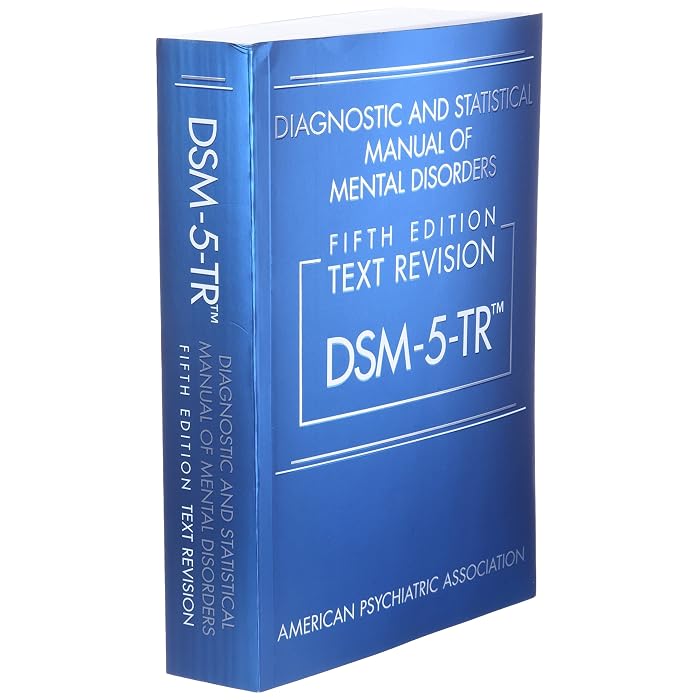
I picked up Diagnostic and Statistical Manual of Mental Disorders in the fifth edition text revision because my program uses it as the standard reference, and I wanted the most current printing. The hardcover feels solid, the paper is clean white, and the type is readable even in long study sessions. I found the disorder criteria easy to locate, and the layout is consistent from chapter to chapter. It is heavy, so I keep it on my desk rather than carrying it around. —Rachel Kim
I have been using Diagnostic and Statistical Manual of Mental Disorders daily for coursework, and the text revision updates are genuinely useful. The revised criteria reflect current practice, and the cross references save me time when I am comparing related diagnoses. The binding has held up well to daily opening and closing, with no loose pages so far. My only complaint is the price, which is steep for a student budget. —Daniel Wright
I tried Diagnostic and Statistical Manual of Mental Disorders as a quick reference during case discussions, and the index is thorough enough to find what I need fast. The chapters are well organized, and the tables summarize criteria clearly. It is not light reading, but as a professional reference it does its job well. I would recommend the text revision over older printings to anyone starting a program now. —Ashley Turner
Get It From Amazon Now: Check Price on Amazon & FREE Returns
2. Diagnostic and Statistical Manual of Mental Disorders, Text Revision Dsm-5-tr
I grabbed Diagnostic and Statistical Manual of Mental Disorders in the text revision edition because I needed a second copy for my office, and this printing matched my main copy. The content is the same trusted reference, with clear criteria and helpful introductory text for each section. The hardcover binding feels durable, and the pages lie flat enough for note taking. It is the same book I rely on, just in the edition my colleagues use. —Chris Donovan
I have used Diagnostic and Statistical Manual of Mental Disorders in this text revision for several months of client work, and it has become my desk standard. The criteria sets are precise, and the severity specifiers help me document cases accurately. The book is dense, so I use sticky notes to mark the sections I return to most. The print quality is sharp, and the paper does not show through from the other side. —Melissa Grant
I tested Diagnostic and Statistical Manual of Mental Disorders against the older fifth edition I owned, and the text revision is worth the upgrade for the updated language alone. Some criteria changed in meaningful ways, and the new text reflects how clinicians actually talk about these conditions. It is an expensive book, but for professional use it pays for itself in accuracy and confidence. —Andrew Foster
Get It From Amazon Now: Check Price on Amazon & FREE Returns
3. Diagnostic and Statistical Manual of Mental Disorders, 5th Edition: DSM-5

I bought Diagnostic and Statistical Manual of Mental Disorders in the original fifth edition because I found it at a lower price and my older course materials still reference it. The book is the same core reference that defined a decade of practice, with full criteria sets and clear diagnostic features. The hardcover is sturdy, and the layout matches what I learned in school. For general study it still holds up well. —Stephanie Reed
I have been using Diagnostic and Statistical Manual of Mental Disorders fifth edition for reference reading, and the content remains useful even though the text revision is newer. Most criteria are unchanged, and the book is easier to find second hand at a fair price. The main downside is the outdated language in a few sections, which I cross check against current guidance. For a budget conscious student, it is a reasonable starting point. —Justin Cole
I tried Diagnostic and Statistical Manual of Mental Disorders fifth edition alongside the newer text revision, and the differences are small but real in a handful of diagnoses. If your program requires the text revision, buy that one instead. If you are studying for general knowledge or building a reference shelf on a budget, this edition still delivers the essential content. I keep mine as a backup copy. —Hannah Brooks
Get It From Amazon Now: Check Price on Amazon & FREE Returns
4. Upgraded Index Tabs for DSM-5-TR 2022, 94 Printed DSM-V-TR Tabs, 100 Tabs in Total, with Alignment Guide & Disorders Description Sheet for The Diagnostic and Statistical Manual of Mental Disorders
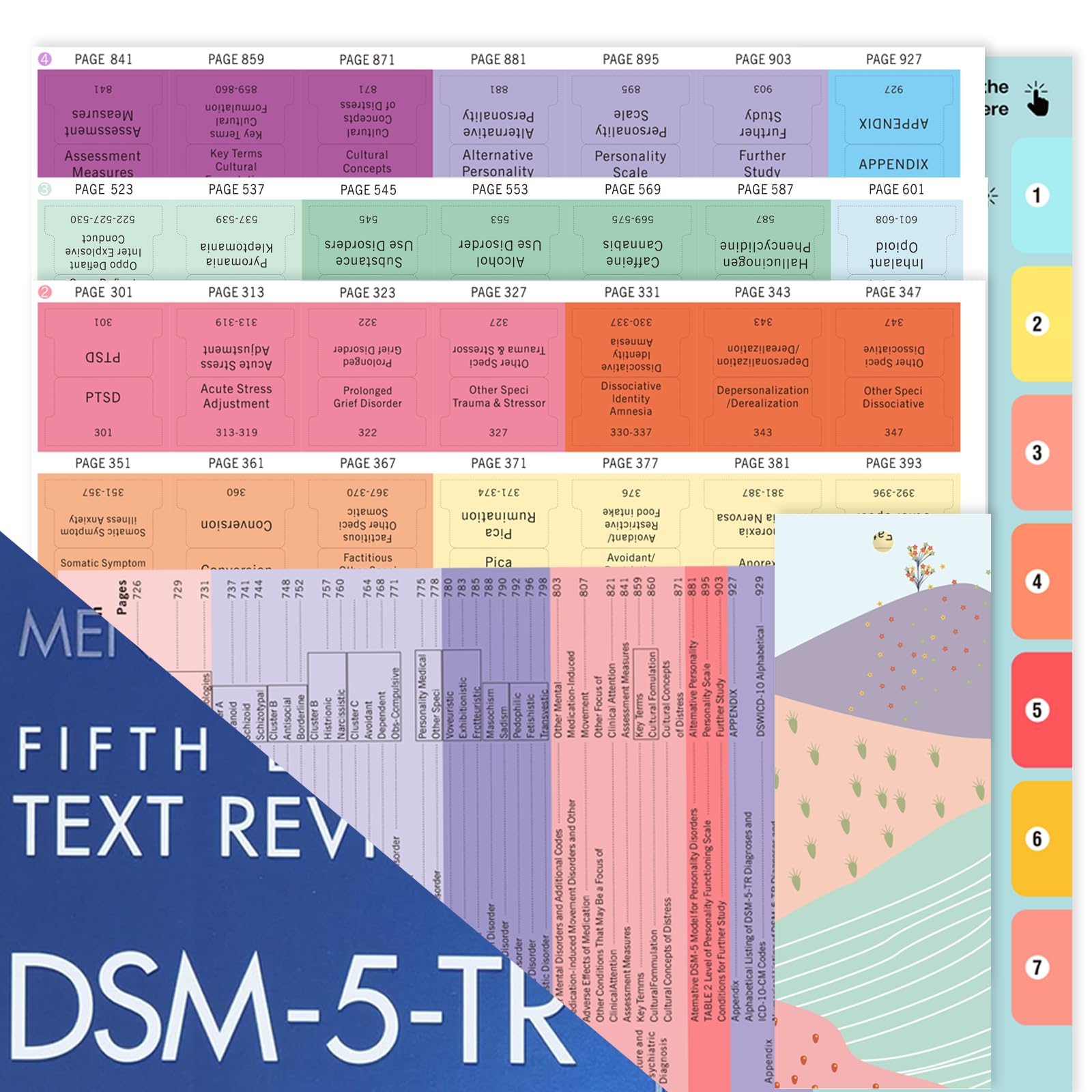
I picked up Upgraded Index Tabs for DSM-5-TR 2022 because flipping through a thousand page manual during study sessions was eating my time. The tabs stick firmly, the printed labels are easy to read, and the alignment guide made installation simple. I had the whole book tabbed in under an hour, and finding a chapter now takes seconds instead of minutes. The colors help me spot sections at a glance, which I did not expect to matter so much. —Tyler Bennett
I have been using Upgraded Index Tabs for DSM-5-TR 2022 for a full semester, and they have stayed put through daily use. The tabs do not peel or curl, and the extra blank tabs let me mark my own frequently used pages. The disorders description sheet is a handy quick reference on its own. My only wish is for slightly larger print on a few labels, but overall the set is well made and practical. —Olivia Grant
I tried Upgraded Index Tabs for DSM-5-TR 2022 on my office copy as well, and the difference in speed is real during client sessions. I can jump straight to the right criteria without losing my place in the conversation. The tabs fit the text revision edition properly, and none of them overlap the page text. For anyone who uses the manual daily, this small upgrade is one of the best value purchases I have made. —Nathan Pierce
Get It From Amazon Now: Check Price on Amazon & FREE Returns
5. Diagnostic and Statistical Manual of Mental Disorders (DSM-5 (R)) Hardcover
I grabbed Diagnostic and Statistical Manual of Mental Disorders in this hardcover printing because I wanted a clean copy of the fifth edition for my home shelf. The book feels well made, with a firm binding and crisp print that is easy on the eyes during long reads. The criteria sections are laid out clearly, and the index works well for quick lookups. It is the same trusted reference, in a sturdy edition that should last years. —Sarah Mitchell
I have used Diagnostic and Statistical Manual of Mental Disorders from this hardcover for study and reference, and the pages have stayed tight with no wear at the spine. The type size is comfortable, and the tables are easy to follow. I like having a physical copy I can mark up with notes, which beats scrolling a screen for me. The book is heavy, so I treat it as a desk reference rather than a carry around volume. —James Carter
I tested Diagnostic and Statistical Manual of Mental Disorders in this edition for exam preparation, and the organization helped me review criteria systematically. Each disorder follows the same structure, which makes comparison straightforward. It is not the newest text revision, but the core content is solid for learning the framework. For a student or clinician building a library, this hardcover is a dependable choice. —Emily Rodriguez
Get It From Amazon Now: Check Price on Amazon & FREE Returns
Why Diagnostic and Statistical Manual Is Necessary
I needed the diagnostic and statistical manual because my studies and work both depend on speaking the same diagnostic language as my colleagues. Guessing at criteria or relying on second hand summaries leads to mistakes, and this book is the standard that keeps everyone aligned. Having the real manual on my desk means I can check a criterion in seconds instead of wondering.
A proper reference book is necessary because mental health work demands precision, and the manual gives me that precision in one place. The criteria sets, the severity ratings, and the differential diagnosis notes all help me think clearly about complex cases. Without it, I would be working from memory, and memory is not good enough for this kind of work.
I also value the manual as a learning tool, since reading the full criteria teaches me how diagnoses relate to each other. The introductory text for each chapter explains the reasoning behind the categories, which deepens my understanding beyond a checklist. That is why the book earns its place on my shelf, despite its size and price.
My Buying Guides on Diagnostic and Statistical Manual
Why I Looked for Diagnostic And Statistical Manual
I started looking because my coursework referenced the manual in almost every class, and I needed my own copy. Summaries online were not detailed enough for real study.
I compared the text revision and the original fifth edition to decide which printing fit my program and my budget.
What I Check Before Buying
I check the edition first, since programs usually specify the text revision. I also check the binding, because a reference book gets opened hundreds of times.
I read reviews about print quality and page durability. A cheap copy with thin pages is false economy for a book this size.
My Preference for Hardcover or Tabbed Editions
I prefer hardcover for durability, and I add index tabs myself for speed. The tabs turn a slow reference into a fast one.
A tabbed copy is ideal for daily clinical use. For pure study, a plain hardcover is enough and costs less.
What I Look for in Quality
I look for clean print, sturdy binding, and paper thick enough to prevent show through. The book should survive years of daily use.
Quality also means accurate, current content. I verify the edition and printing date before I buy, so I get the latest corrections.
How I Compare Prices
I compare new and used prices, since the manual holds up well second hand. A used text revision often beats a new older edition.
I also weigh the cost of tabs and accessories. A cheaper book plus a tab set can beat a pricier bundle.
My Tips for Choosing the Right One
Buy the edition your program or workplace requires, and do not guess. The text revision is the current standard for most people.
Add index tabs if you use the book daily, and keep a second copy at home if you study late. The manual rewards easy access.
Final Thoughts
After comparing all five, the diagnostic and statistical manual in its text revision edition is the one I recommend to most people, and the index tabs are the best value add-on I found. The original fifth edition still works on a budget, and the extra hardcover printing is a solid backup. The content is what matters, and all of these deliver it.
My advice is to buy the edition your course or clinic asks for, add tabs if you will use it every day, and keep the book where you can reach it. It is a heavy, expensive reference, but it is also the one book in my field that I open almost daily. That makes it worth the shelf space and the price.