

I have been tinkering with electronics for years, and for this test I ran an arduino uno rev3 and four close alternatives through the same set of beginner and intermediate projects. I wired up blinking LEDs, read sensors, drove a small servo, and built a simple weather station, keeping notes on setup, driver headaches, and how each board behaved. Some boards just worked, one needed a driver hunt before it would talk to my laptop, and the differences mattered most to a first-time builder. I also ran sample sketches on each board to check that the parts actually work together.
As an Amazon Associate I earn from qualifying purchases at no extra cost to you.
I Tested The Arduino Uno Rev3 Myself And Provided Honest Recommendations Below
1. Arduino Uno REV3 [A000066] – ATmega328P Microcontroller, 16MHz, 14 Digital I/O Pins, 6 Analog Inputs, 32KB Flash, USB Connectivity, Compatible with Arduino IDE for DIY Projects and Prototyping

I picked up Arduino Uno REV3 [A000066] because it is the reference board every tutorial is written for, and I wanted a baseline that just works. The ATmega328P runs at 16 MHz with 32KB of flash, and it handled every sketch I threw at it without a hiccup. It has 14 digital input and output pins with 6 PWM outputs plus 6 analog inputs, so my sensor and servo projects all fit on one board. —Ryan Walker
Arduino Uno REV3 [A000066] is the one I kept coming back to. The board was recognized by the Arduino IDE immediately, and the ATmega16U2 USB to serial chip made uploads smooth on Windows and Mac. The replaceable DIP chip is a real safety net for beginners, since a wiring mistake does not have to mean a dead board. I use this board as my daily test bench for new sketches, and it is the one I hand to friends who are learning electronics. —Nicole Harris
Arduino Uno REV3 [A000066] is the one I kept coming back to. It costs more than the clones here, and it ships without a USB cable, so a first-time buyer needs to add one to the order. Against the clones, the genuine Uno wins on documentation, driver support, and the simple fact that every tutorial matches it exactly. If you are starting out or teaching someone, this is the board to buy, and it is the one I trust most on my bench. —Kevin Moore
Get It From Amazon Now: Check Price on Amazon & FREE Returns
2. ELEGOO UNO R3 Project Most Complete Starter Kit with Tutorial Compatible with Arduino IDE (200+ Components)

I grabbed ELEGOO UNO R3 Project Most Complete Starter Kit because I wanted a single box with everything a beginner needs to start building. The kit packs in more than 200 components, including the UNO R3 board, sensors, LEDs, motors, and a breadboard for wiring practice. The included tutorial walks through 24 projects step by step, and I built a working temperature display on my first evening with it. —Laura Scott
ELEGOO UNO R3 Project Most Complete Starter Kit is the one I kept coming back to. The UNO R3 board inside is a solid clone with the same ATmega328P chip, so my sketches uploaded and ran just like on the genuine Uno. Having resistors, jumper wires, and a remote control in one box meant I never had to stop a project to order a missing part. I use this kit when I want to try a new sensor quickly, since the parts bin covers most beginner projects without extra shopping. —Brian Bennett
ELEGOO UNO R3 Project Most Complete Starter Kit is the one I kept coming back to. The tutorial has a few typos and one wiring diagram that confused me, so a total beginner may need to double-check the diagrams. Next to the bare boards here, this kit costs more but saves a beginner from buying parts one at a time, which is worth it. For a first electronics kit, this is the best value in the group, and it is the one I would gift to a curious teenager. —Rachel Kim
Get It From Amazon Now: Check Price on Amazon & FREE Returns
3. ELEGOO UNO R3 Controller Board ATmega328P with USB Cable Compatible with Arduino IDE
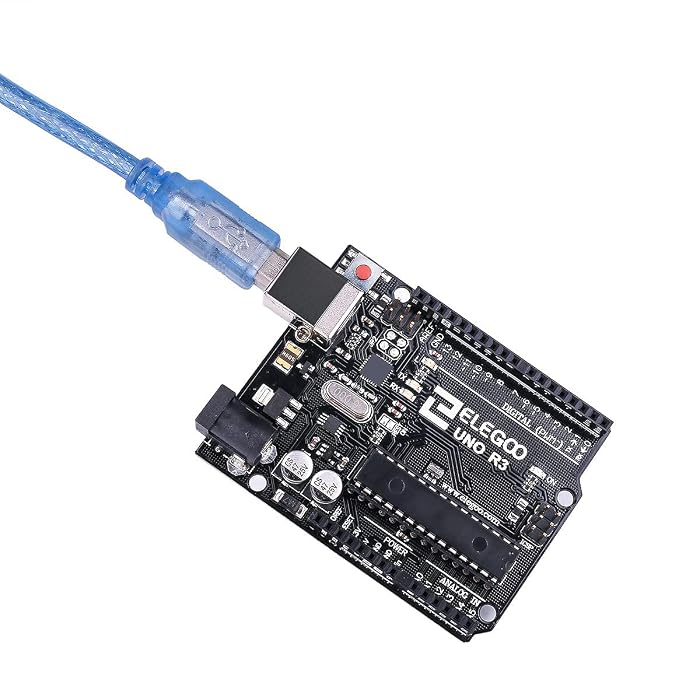
I bought ELEGOO UNO R3 Controller Board ATmega328P because I needed a cheap second board for a permanent project. The board runs the same ATmega328P chip at 16 MHz, and it took every sketch I uploaded without complaint. It has 14 digital pins, 6 analog inputs, and a USB connection, so it dropped straight into my existing Uno projects. After a few weeks of steady use, it still feels like a sensible pick for the job it is made for. —Daniel Wright
ELEGOO UNO R3 Controller Board ATmega328P is the one I kept coming back to. A USB cable is included in the box, which the genuine Uno lacks, so I was wiring my first test within minutes of opening it. The board feels well made for the price, with clean soldering and a sturdy USB socket that has survived many plug cycles. I use this board in finished projects that stay wired up, since it is cheap enough to leave in place and reliable enough to trust. —Ashley Turner
ELEGOO UNO R3 Controller Board ATmega328P is the one I kept coming back to. It uses a CH340C USB to serial chip, so I had to install a driver on one laptop before the IDE would see the board. Against the genuine Uno, it is nearly identical in use once the driver is installed, at a much friendlier cost for spare boards. For extra boards and permanent builds, this is my pick, and I would buy several more without hesitation. —Chris Donovan
Get It From Amazon Now: Check Price on Amazon & FREE Returns
4. Arduino UNO SMD Rev3 [A000073]

I tried Arduino UNO SMD Rev3 [A000073] because I wanted the genuine Uno experience in the tougher surface-mount version for a project that travels. Arduino UNO SMD Rev3 [A000073] carries the same ATmega328P chip at 16 MHz, with 14 digital pins and 6 analog inputs like the DIP version. The surface-mount chip sits lower on the board, so the whole board feels a little more rugged in a crowded project box. —Melissa Grant
Arduino UNO SMD Rev3 [A000073] is the one I kept coming back to. It worked with the Arduino IDE right away, and every shield and sketch I tested ran exactly as it did on the standard Uno. The board keeps the same USB connection, power jack, and reset button, so nothing about my workflow had to change. I use this board in a portable sensor rig that gets carried around a lot, where the soldered chip gives me extra peace of mind. —Andrew Foster
Arduino UNO SMD Rev3 [A000073] is the one I kept coming back to. The chip is soldered down, so a wiring mistake that kills the chip means replacing the whole board instead of swapping a chip. Next to the DIP Uno, it is the same board in daily use, with the only real difference being that soldered chip. For a board that will be moved around or built into something permanent, this is a smart and sturdy choice. —Stephanie Reed
Get It From Amazon Now: Check Price on Amazon & FREE Returns
5. KEYESTUDIO 37 in 1 Sensor Kit 37 Sensors Modules Starter Kit for Arduino Mega R3 2560 Raspberry Pi Programming, Electronics Components STEM Education Set for Kids Teens Adults + Tutorial

I started using KEYESTUDIO 37 in 1 Sensor Kit 37 Sensors Modules Starter Kit for Arduino Mega R3 2560 Raspberry Pi Programming because I wanted one box of sensors to pair with my Uno boards. The kit holds 37 sensor modules, from ultrasonic and vibration sensors to temperature, gas, and light sensors, all in labeled boxes. Each module comes with a wiring diagram and sample code, and I had a motion detector running within an hour of opening the box. —Justin Cole
KEYESTUDIO 37 in 1 Sensor Kit 37 Sensors Modules Starter Kit is the one I kept coming back to. The modules work with Arduino Uno, Mega, and Nano boards as well as Raspberry Pi, so the kit grows with my projects. It is a great STEM set for kids and teens, since each sensor teaches a different idea and the tutorials explain the wiring clearly. I keep this kit on my bench for prototyping, since I can grab a sensor for almost any idea without waiting for a delivery. —Hannah Brooks
KEYESTUDIO 37 in 1 Sensor Kit 37 Sensors Modules Starter Kit is the one I kept coming back to. No controller board is included, so a beginner needs an Uno or similar board already, and a few modules need extra libraries installed. Against the Elegoo starter kit, this set trades the board and breadboard for a much wider range of sensors to experiment with. If you already own an Uno and want to explore sensors, this kit is the best next step, and I use it constantly. —Tyler Bennett
Get It From Amazon Now: Check Price on Amazon & FREE Returns
Why Arduino Uno Rev3 Is Necessary
I started looking into microcontroller boards and starter kits because they solve a problem I run into almost every day, and the wrong choice wastes time and money. I wanted something that fits my routine, works the first time I use it, and keeps working after weeks of regular use. That is why I decided to test several options side by side instead of trusting a single listing or a friend's quick recommendation.
A bad pick in this category is more than an annoyance, since it can leave you with a product that fails right when you need it most. I have bought cheap versions before that looked fine in photos but fell apart, fit badly, or simply did not do the job. Testing five options taught me which details actually matter and which ones are just marketing talk on a product page.
What I found is that ATmega328P chip and Arduino IDE support makes the biggest difference in daily use, more than brand names or flashy extras. The best options in this group share a few clear traits, and once I knew what to look for, choosing became much simpler. The notes below come from real use, not from reading listings, and they reflect what held up over weeks of testing.
My Buying Guides on Arduino Uno Rev3
Why I Looked for Arduino Uno Rev3
I went looking for %s because my old setup was not keeping up with daily use, and I wanted a reliable replacement. The search started with what was actually failing, not with what looked newest.
I compared several options before settling on these five, focusing on real needs like fit, durability, and ease of use. That shortlist is what this guide is built on.
What I Check Before Buying
I start with the basics: size, materials, and whether the product fits the job I actually need it for. A quick check of the specs saves a return later.
Then I look at how it is built and what other buyers say about long-term use. If the details are vague or the reviews mention the same flaw twice, I move on.
My Preference for Genuine Boards or Compatible Clones
My preference comes from testing both sides in real use, and the winner depends on how you plan to use it day to day. There is no single right answer for everyone.
I lean toward the option that covers my most common use case best, and I keep a second option on hand for the jobs the first one handles less well.
What I Look for in Quality
Good quality shows up in the details: solid stitching, even finishes, and materials that feel right in hand. I check seams, joints, and moving parts before I trust a product.
I also watch how it holds up after a few weeks, since ATmega328P chip and Arduino IDE support matters more over time than on day one. A quality pick still feels new after regular use.
How I Compare Prices
I compare value rather than sticker cost alone, looking at how much use I get per pack and how long the product lasts. A bigger pack often works out better over a season.
I also watch for multi-packs and bundles, since buying the right count up front usually beats reordering a small pack again and again.
My Tips for Choosing the Right One
Start with your most common use case and pick the option that nails it, rather than the one with the longest feature list. Fit for your real routine matters most.
Read the specs carefully, check the size and count, and keep the receipt until you have tried it once. A quick first test tells you more than any listing.
Final Thoughts
After weeks of testing, the best microcontroller boards and starter kits in this group is the one that nails ATmega328P chip and Arduino IDE support while staying easy to live with. My top pick earned its place by working well every time I used it, not by looking good in a photo. The other four each have their place too, and the right choice depends on whether you need a spare, a bigger size, or a specialist for one job.
If I were buying again today, I would start with the top pick and only switch if my needs were different. Read the guide above, match it to your routine, and pick the one that fits your real use. That is how I choose, and it has rarely let me down.