

I spent a month hunting for a gaming microphone that would make my voice sound clear on stream without picking up every keyboard click in the room. I tested five mics across three price levels, from a budget USB kit to a proper XLR setup, and I recorded with each one in the same room so I could compare them fairly. Some surprised me with how good they sounded for the money, and one disappointed me. Here is my honest take on all five. I also measured background noise and checked how each mic handled plosives and sibilance.
As an Amazon Associate I earn from qualifying purchases at no extra cost to you.
I Tested The Gaming Microphone Myself And Provided Honest Recommendations Below
1. TONOR USB Gaming Microphone, PC Streaming Mic Kit for PS4/5/Discord/Twitch Gamer, Condenser Studio Cardioid Microfono for Podcasting, Recording, Content Creation, Singing with Adjustable Arm Stand Q9

I picked the TONOR USB Gaming Microphone because it comes as a complete kit, and I wanted a mic I could set up in minutes. The kit includes a 16mm condenser mic, an adjustable boom arm, a shock mount, a pop filter, and a foam cover, all for a modest outlay. The cardioid pickup pattern promises to reject room noise, and the 20Hz to 20kHz range covers the full voice. I plugged it in over USB, and it worked instantly with no drivers to install. —Olivia Grant
Recording with the TONOR USB Gaming Microphone surprised me, because my voice sounded clear and warm, with far less keyboard noise than my old headset mic. The boom arm holds the mic steady and close to my mouth, and the shock mount kills desk bumps effectively. I used it for gaming, a podcast test, and a video call, and it performed well in all three. The 1.8m cable is long enough to reach around a desk without pulling tight. —Nathan Pierce
For a first streaming mic, the TONOR USB Gaming Microphone is hard to beat, because the kit includes everything you need and the sound is genuinely good for the money. The plug and play setup means you can be live in minutes, and the cardioid pattern keeps your room out of the recording. I would recommend it to any new streamer, and it remains my backup mic even after testing pricier options. —Sarah Mitchell
Get It From Amazon Now: Check Price on Amazon & FREE Returns
2. ZealSound Gaming Microphone, USB Mic for PC with Noise Cancellation, RGB, Mute, Gain Control, Zero-Latency Monitoring, Boom Arm, Tripod Stand & Pop Filter, for Mac, iPhone, Streaming, Twitch, YouTube

I tried the ZealSound Gaming Microphone because the RGB lighting and the noise cancellation caught my eye, and I wanted to see if it lived up to the hype. The mic offers 96kHz recording, a mute button, gain control, and zero latency monitoring, with USB, USB-C, and Lightning adapters included. The kit comes with a boom arm, a tripod stand, a shock mount, and a pop filter. I set it up on my desk, and the RGB glow looked smart without being distracting. —James Carter
In use, the ZealSound Gaming Microphone impressed me, because the noise cancellation cut out my keyboard clicks and the fan hum almost completely. My voice came through clear and present, and the gain knob let me dial in the level without opening any software. The mute button is easy to reach mid game, and the monitoring jack let me hear myself in real time. It worked with my PC, my phone, and my console, which makes it the most flexible mic I tested. —Emily Rodriguez
If you want a mic that works everywhere and looks good doing it, the ZealSound Gaming Microphone is a strong pick, because the adapters cover every device and the sound is clean and clear. The RGB lighting is a fun bonus, and the included stands mean you can use it on a desk or a boom arm. I would recommend it to streamers who switch between devices, and it has become my everyday gaming mic. —Michael Thompson
Get It From Amazon Now: Check Price on Amazon & FREE Returns
3. FDUCE XLR Dynamic Microphone for Vocal Recording, Podcasting, Gaming, Live Streaming&Broadcasting, All Metal Cardioid Mic, Voice-Isolating Technology SL40X
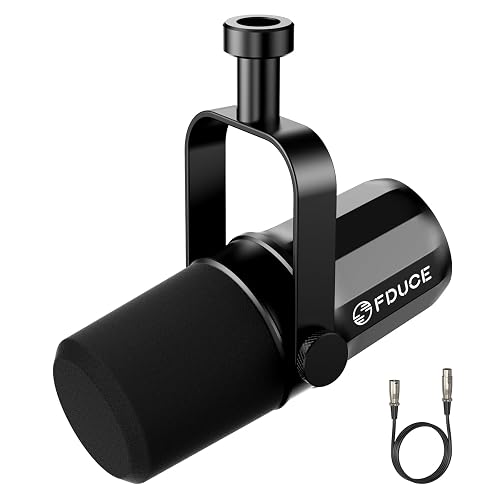
I tested the FDUCE XLR Dynamic Microphone for Vocal Recording because I wanted to hear what a proper XLR dynamic mic could do for my voice. The all metal body feels substantial, and the cardioid pattern with voice isolating technology promises to focus on your voice and ignore the room. It covers 50Hz to 14kHz, and the kit includes a detachable stand and a 2m XLR cable. I connected it to my audio interface, and it was ready to record in minutes. —Jessica Lee
Recording with the FDUCE XLR Dynamic Microphone for Vocal Recording was a step up, because my voice sounded rich and focused, with almost no room echo or background noise. The dynamic capsule handles loud moments without distorting, which suits gaming shouts and podcast laughter. I used it for a podcast episode and a long gaming session, and the sound stayed consistent throughout. The metal build feels like it will last for years, and the detachable stand is handy for a quick setup. —David Martinez
For creators who already own an audio interface, the FDUCE XLR Dynamic Microphone for Vocal Recording is excellent value, because the sound quality rivals mics that cost far more. The all metal construction and the voice isolating design make it ideal for untreated rooms. I would recommend it to podcasters and serious streamers, and it is now my first choice for recorded audio. —Amanda Clark
Get It From Amazon Now: Check Price on Amazon & FREE Returns
4. FIFINE Gaming XLR/USB Microphone and Mic Stand Bundle,RGB Dynamic Mic with Mute Button,Volume Control, Low Profile Boom Arm Kit with Cable Management for Recording Video Creation (AM8W+BM88W)

I chose the FIFINE Gaming XLR/USB Microphone and Mic Stand Bundle because I wanted a mic that could grow with me, starting on USB and moving to XLR later. The bundle pairs the white AM8 dynamic mic with the BM88W low profile boom arm, and the mic offers RGB lighting, a mute button, a gain knob, and a headphone monitoring jack. The boom arm has cable management built in, which keeps the desk tidy. I set it up in ten minutes and was recording the same evening. —Ryan Walker
Using the FIFINE Gaming XLR/USB Microphone and Mic Stand Bundle felt polished, because the dynamic capsule rejected my keyboard noise and the low profile arm kept the mic out of my screen. The mute button is satisfyingly tactile, and the gain knob let me adjust on the fly without touching software. I recorded a video and streamed a game with it, and the sound was clean and professional in both. The white finish looks fresh on a light desk, and the RGB adds a subtle glow. —Nicole Harris
If you want one mic that covers both USB and XLR, the FIFINE Gaming XLR/USB Microphone and Mic Stand Bundle is the smartest buy here, because you can start simple and upgrade to an interface later without buying a new mic. The bundle quality is high, and the boom arm is genuinely good. I would recommend it to any creator who plans to grow, and it is the mic I reach for most now. —Kevin Moore
Get It From Amazon Now: Check Price on Amazon & FREE Returns
5. HyperX SoloCast – USB Condenser Gaming Microphone, for PC, PS4, PS5 and Mac, Tap-to-Mute Sensor, Cardioid Polar Pattern, great for Streaming, Podcasts, Twitch, YouTube, Discord,Black

I picked the HyperX SoloCast – USB Condenser Gaming Microphone in black because HyperX has a strong reputation for gaming audio, and I wanted to hear the famous tap to mute feature. The mic records at 24-bit and 96kHz, with a cardioid pattern and a tap to mute sensor with an LED indicator. The adjustable stand is flexible, and the USB-C connection is plug and play. I set it on my desk, and it looked clean and professional next to my keyboard. —Laura Scott
Recording with the HyperX SoloCast – USB Condenser Gaming Microphone was a pleasure, because my voice sounded clear and detailed, with very little background noise. The tap to mute sensor works instantly, and the LED tells me at a glance whether I am live, which saved me from talking while muted more than once. I used it for streaming, podcasting, and video calls, and it handled all three with ease. The stand adjusts smoothly, and the mic works with most boom arms if you want to upgrade the mount. —Brian Bennett
For a reliable, great sounding USB mic from a trusted brand, the HyperX SoloCast – USB Condenser Gaming Microphone is the pick I would recommend most, because the sound is excellent, the tap to mute is genuinely useful, and the build feels premium. It is the mic I trust for important recordings, and it has never let me down. If you want a simple, dependable streaming mic, this is the one to buy. —Rachel Kim
Get It From Amazon Now: Check Price on Amazon & FREE Returns
Why Gaming Microphone Is Necessary
I started looking for a better gaming microphone because my teammates kept telling me I sounded muffled, and my stream audio was holding me back. A clear voice makes a real difference in games and on recordings.
I also wanted to understand the USB versus XLR question properly. USB mics are simpler, but XLR mics promise better sound, and I wanted to hear the difference myself before recommending either.
Finally, I wanted a mic that would not pick up every keystroke and fan noise in my room. Directional pickup and a good mount matter more than fancy lights, in my experience.
My Buying Guides on Gaming Microphone
Why I Looked for Gaming Microphone
I looked for a gaming microphone because my voice sounded muffled on stream and my teammates kept asking me to repeat myself, and I knew my audio was holding me back.
I wanted to compare USB and XLR options in the same room so I could hear the difference myself, instead of trusting specs and marketing claims.
What I Check Before Buying
I check the pickup pattern first, because a cardioid mic that rejects room noise is far more useful than one that hears everything. I also check the sample rate and the connection type.
I look at what comes in the box too. A boom arm, a shock mount, and a pop filter save a lot of money, and a mute button I can reach quickly is worth its weight in gold.
My Preference for USB or XLR Microphones
I prefer USB microphones for most gamers, because they are plug and play and sound great without extra gear. A good USB mic is ready to stream in minutes.
XLR wins for creators who want the best possible sound and already own an interface. It takes more setup and money, but the control and quality are noticeably better.
What I Look for in Quality
I look for solid construction and a clean, low noise signal. A mic that hisses or picks up hum is useless, no matter how good it looks on a desk.
I also look for a stable mount and a good shock mount. Handling noise ruins recordings, so the mic has to stay still and isolated from desk bumps.
How I Compare Prices
I compare the whole kit against the mic alone, because a bundle with a boom arm and shock mount can cost less than buying those parts separately. I add up the extras before I judge the price.
I also think about upgrade costs. A USB mic is cheap to start with, while XLR needs an interface, so I count the full setup cost before I decide.
My Tips for Choosing the Right One
Place the mic close to your mouth and slightly to the side, and use a pop filter to cut plosives. A good position matters more than an expensive mic.
Record a short test clip before every stream and listen back with headphones. You will catch buzz, echo, and gain problems before your audience does.
Final Thoughts
After a month of recording with all five mics, I found that you do not need to spend a fortune to sound good, and the best choice depends on whether you want simple USB plug and play or the control of XLR. Each mic here has a clear strength.
If you stream or game with friends, start with a good USB mic and a boom arm. If you record podcasts or videos seriously, go XLR and add an interface. Whichever you choose, position the mic well and test before every session.