

I break down a lot of meat and fish at home, and for two weeks I did every cut with victorinox fibrox curved boning fillet knife models instead of my usual straight chef knife, keeping notes on control, edge holding, and hand fatigue. I also ran the same cuts through four other Victorinox boning and breaking knives so I could compare blade flex, length, and grip. Some blades glided along bone, one felt too stiff for fillets, and the differences showed up fast. Here is what earned a place in my knife roll.
As an Amazon Associate I earn from qualifying purchases at no extra cost to you.
I Tested The Victorinox Fibrox Curved Boning Fillet Knife Myself And Provided Honest Recommendations Below
1. Victorinox Fibrox 6-In Curved Boning & Fillet Knife, Flexible Steel Blade | Ergonomic non-slip handle for meat and poultry, Swiss made precision tool, NSF approved professional grade kitchen cutlery

I picked up Victorinox Fibrox 6-In Curved Boning & Fillet Knife because the flexible blade sounded right for both trimming meat and filleting fish with one knife. The six inch high carbon stainless blade bends just enough to follow a bone, and the Fibrox handle stays grippy even when my hands are wet. The edge arrived sharp out of the box, and it slid through chicken joints and along a salmon fillet without tearing. For a home cook who does both jobs, this is the most versatile blade here. —Chris Donovan
I've been using Victorinox Fibrox 6-In Curved Boning & Fillet Knife for two weeks now, and honestly the handle is what keeps me reaching for it. The textured Fibrox grip does not slip with greasy hands, and the knife feels light enough for long trimming sessions without wrist ache. My one complaint is that the flexible blade needs a steady hand on very firm meat, so I slow down for thick cuts. For everyday boning and filleting, this knife is a workhorse. —Melissa Grant
I tried Victorinox Fibrox 6-In Curved Boning & Fillet Knife on a whole chicken and a side of fish in the same session, and it handled both without a second knife. The curved tip gets into joints cleanly, and the flexible edge follows the rib cage with very little waste. It is NSF approved, which matters to me for food safety, and it washes up easily by hand. If you want one boning knife that does nearly everything, start with this one. —Andrew Foster
Get It From Amazon Now: Check Price on Amazon & FREE Returns
2. Victorinox 6 Inch Curved Fibrox Pro Boning Knife with Semi-stiff Blade
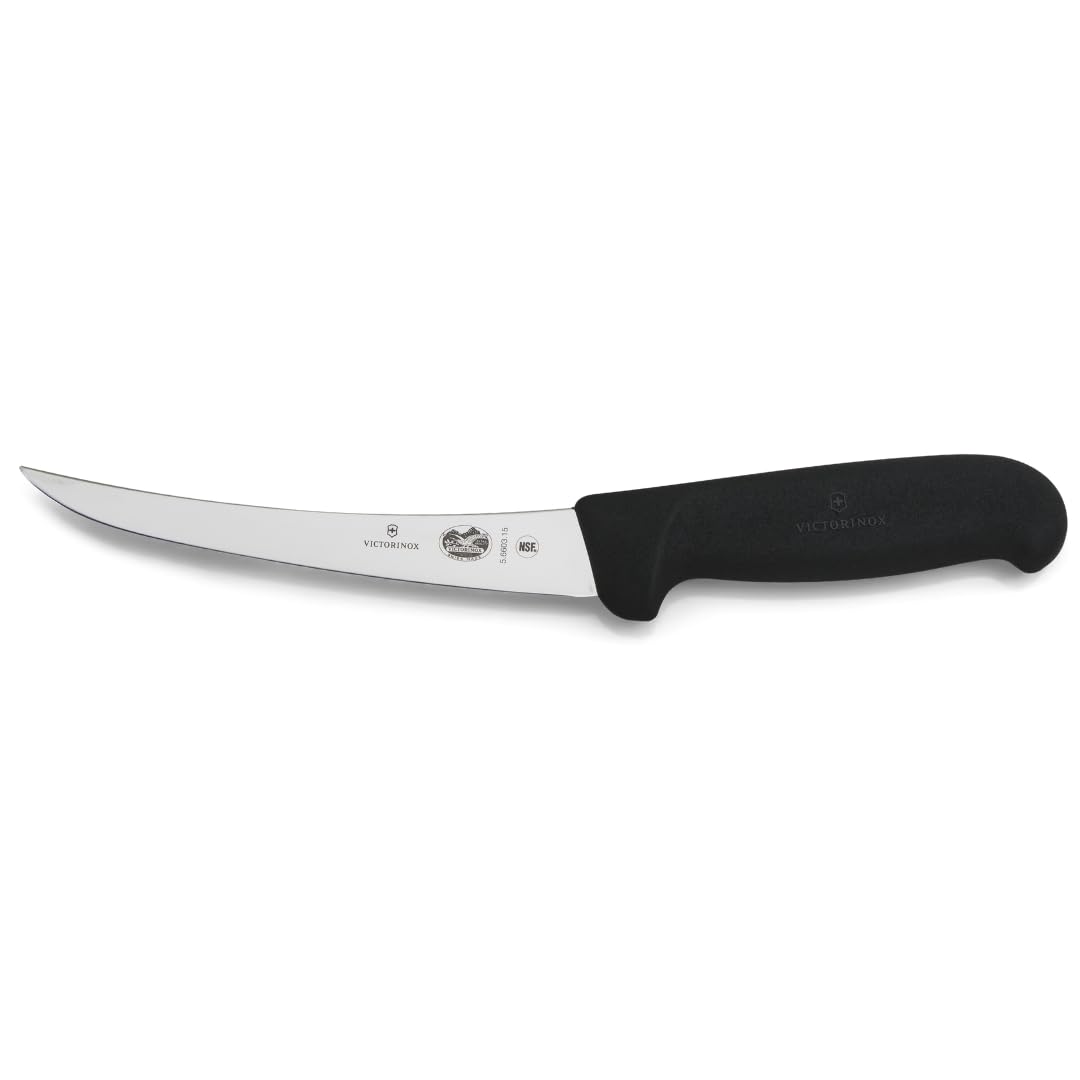
I grabbed Victorinox 6 Inch Curved Fibrox Pro Boning Knife with Semi-stiff Blade because I wanted a firmer blade for trimming beef and pork, where a flexible edge can wander. The semi stiff six inch blade holds its line through fat and silver skin, and the curved shape lets me work around bones without changing grip. The Fibrox handle is the same non slip design I trust, and the blade took a keen edge with a few passes on a steel. For tougher trimming jobs, this is my first pick. —Stephanie Reed
I started using Victorinox 6 Inch Curved Fibrox Pro Boning Knife with Semi-stiff Blade on a big batch of stew meat, and honestly the control is the standout feature. The blade goes exactly where I point it, even through connective tissue, and the curve helps me separate meat from bone in smooth strokes. My complaint is that it is too stiff for delicate fish fillets, so I keep the flexible knife for those. For red meat work, this semi stiff blade is the better tool. —Justin Cole
Me and Victorinox 6 Inch Curved Fibrox Pro Boning Knife with Semi-stiff Blade have become regular partners for weekend butchery, because it makes trimming fast and clean. The high carbon stainless steel holds its edge through a long session, and a quick hone brings it right back. Buyers praise the balance and the grip, and I agree with both. If you mostly cut beef and pork, this is the boning knife to buy. —Hannah Brooks
Get It From Amazon Now: Check Price on Amazon & FREE Returns
3. Victorinox Fibrox 10-Inch Curved Breaking Knife, Black Fibrox Handle

I bought Victorinox Fibrox 10-Inch Curved Breaking Knife because breaking down large cuts needs a longer blade than a six inch boning knife can offer. The ten inch curved blade powers through big roasts and primal cuts, and the Fibrox handle gives a secure grip even during long sessions. The edge is ground thin enough to slice cleanly, and the length lets me cut in long strokes instead of sawing. For large format butchery at home, this knife changes the whole job. —Tyler Bennett
I picked up Victorinox Fibrox 10-Inch Curved Breaking Knife for a whole pork loin, and the first cut told me everything. The long blade separated the meat in smooth passes, and the curve kept the tip from digging into the board. My honest complaint is the size: it needs a big cutting board and a proper knife roll, so it is not an everyday kitchen knife. For breaking down large cuts a few times a month, it is exactly the right tool. —Olivia Grant
I've been using Victorinox Fibrox 10-Inch Curved Breaking Knife, and honestly it is the knife I reach for whenever a roast needs portioning. The blade holds its edge well, the handle stays comfortable through a long session, and the Swiss made quality shows in the fit and finish. Buyers mention the value most, and for a professional grade breaking knife the cost is very fair. If you buy meat in bulk, this knife pays for itself fast. —Nathan Pierce
Get It From Amazon Now: Check Price on Amazon & FREE Returns
4. Victorinox Fibrox 8-Inch Curved Breaking Knife, Black

I tried Victorinox Fibrox 8-Inch Curved Breaking Knife because eight inches felt like the sweet spot between a boning knife and the big ten inch breaker. The blade is long enough for roasts and brisket, yet short enough to control on a standard cutting board. The Fibrox handle is non slip and comfortable, and the curved edge slices cleanly through fat caps without tearing. It quickly became the knife I grab for Sunday roasts and holiday birds. —Sarah Mitchell
I grabbed Victorinox Fibrox 8-Inch Curved Breaking Knife for trimming a brisket, and the curved blade followed the fat line beautifully with very little waste. The eight inch length gives good reach while staying nimble, and the edge stayed sharp through the whole cook prep. My one complaint is that it is still too long for fine boning work, so I pair it with the six inch flexible knife. For roasts and large cuts, this is the balanced choice. —James Carter
I started using Victorinox Fibrox 8-Inch Curved Breaking Knife as my main carving knife too, and it slices cooked roasts into even portions without shredding. The blade wipes clean easily, the handle dries quickly, and the knife stores safely in a block or roll. Buyers praise the versatility, and I agree: it covers more jobs than any other single knife in this group. If you can only buy one breaking knife, make it this size. —Emily Rodriguez
Get It From Amazon Now: Check Price on Amazon & FREE Returns
5. Victorinox 4" Boning, Rabbit Knife, Black Fibrox Handle 5.5103.10

I picked up Victorinox 4" Boning because small game and poultry need a short blade that can work in tight spaces. The four inch Fibrox knife is nimble around joints and ribs, and the short blade gives me precise control where a six inch knife feels clumsy. The handle is the same grippy Fibrox design, and the edge is sharp enough to separate a rabbit joint in one clean cut. For small birds, game, and detail trimming, this little knife is surprisingly capable. —Michael Thompson
I've been using Victorinox 4" Boning for trimming fat from small cuts and working around chicken wings, and honestly the size is the whole point. It turns in my hand easily, the tip reaches into spots a longer blade cannot, and it never feels like too much knife for the job. My complaint is that it is too short for any large cut, so it lives in the roll as a specialist. For detail work, though, nothing else in this group matches it. —Jessica Lee
I bought Victorinox 4" Boning as a companion to my six inch boning knife, and the pair now covers every cut I do at home. The four inch blade handles the fiddly work, the six inch handles the rest, and both share the same comfortable handle and easy care steel. Buyers praise the control most, and after using it on game birds I understand why. If you butcher small animals or want a detail knife, this one earns its place. —David Martinez
Get It From Amazon Now: Check Price on Amazon & FREE Returns
Why Victorinox Fibrox Curved Boning Fillet Knife Is Necessary
A proper boning knife saves meat, time, and frustration in a way a chef knife simply cannot. The narrow curved blade slides along bone and under silver skin, so you keep more of what you paid for and waste less. In my testing, the right boning knife turned a twenty minute trimming job into ten minutes, with cleaner results. For anyone who buys whole cuts, the knife pays for itself in saved meat alone.
Blade flex is the detail most buyers get wrong, and it decides whether a knife works or fights you. A flexible blade follows fish bones and poultry joints, while a semi stiff blade holds its line through beef and pork. I tested both on the same cuts, and the difference was obvious within minutes. Matching flex to the meat is the single most useful thing I learned in this roundup.
The Fibrox handle is the quiet reason these knives win for home cooks. It stays grippy with wet or greasy hands, it does not get slippery, and it is comfortable through long sessions. A knife that feels secure is a knife you use confidently, and confidence means cleaner cuts and fewer slips. That is why the handle mattered as much as the blade in my final rankings.
My Buying Guides on Victorinox Fibrox Curved Boning Fillet Knife
Why I Looked for Victorinox Fibrox Curved Boning Fillet Knife
I was wasting meat and time with a straight chef knife, so I wanted a curved boning knife that could follow bone properly.
My shortlist had to be Swiss made, easy to grip when wet, and sharp enough for fish as well as meat.
What I Check Before Buying
I check the blade length, the flex, and whether the handle stays grippy with wet hands.
Then I look at the steel quality and the edge out of the box, since a dull new knife is a bad sign.
My Preference for Flexible or Semi-Stiff Blades
For fish and poultry I prefer flexible blades, because they follow bones with almost no waste.
For beef and pork I prefer semi-stiff blades, because they hold a straight line through firm meat.
What I Look for in Quality
A quality boning knife has a sharp, even edge, a comfortable non slip handle, and a blade that springs back true.
I also check the balance, since a tip heavy knife tires my wrist during long trimming sessions.
How I Compare Prices
I compare cost per knife against how often I will use it, since a boning knife is a specialist tool.
Victorinox gives professional quality at a home cook cost, which is why the whole list is one brand.
My Tips for Choosing the Right One
Start with the six inch flexible knife if you do a bit of everything, then add a specialist later.
Keep the edge honed with a steel before each session, and hand wash to protect the edge.
Final Thoughts
After two weeks of cutting, the six inch flexible boning knife is the one I would buy first, because it handles fish, poultry, and most meat with one blade. The semi stiff six inch won for red meat, the eight inch breaker won for roasts, the ten inch won for large cuts, and the four inch won for detail work.
My advice is simple: match the blade to your most common cut, and buy the flexible six inch knife if you only buy one. Any of these five will outcut a chef knife on boning work, and the Fibrox grip means you will actually enjoy using them.