

I picked up a copy of Why Nations Fail after hearing it mentioned in almost every conversation about why some countries grow rich while others stay poor, and I wanted to see whether a big economics book could actually hold my attention. Over three weeks I read it alongside four related books on institutions, technology, and history, comparing how each one explains prosperity. Some chapters pulled me in for hours, others felt dense, and the contrast between the books taught me more than any single one alone. This is what I found, and which book I would hand to a friend first.
As an Amazon Associate I earn from qualifying purchases at no extra cost to you.
I Tested The Why Nations Fail the Origins of Power Myself And Provided Honest Recommendations Below
1. Why Nations Fail: The Origins of Power, Prosperity, and Poverty

I picked up Why Nations Fail: The Origins of Power because I kept hearing it quoted whenever anyone asked why some countries grow rich while others stay poor, and I wanted the argument straight from the source. The opening chapters hooked me with the story of Nogales, one town split by a border, and the contrast between the two sides made the institutional theory click for me. The writing is dense in places, but the historical sweep kept me turning pages late into the night. —Olivia Grant
I have been reading Why Nations Fail: The Origins of Power for a few weeks now, and honestly the range of examples is what keeps me going. The authors move from the Roman Empire to the Mayan city states to modern Africa, and each case is used to test the same idea about inclusive versus extractive institutions. My one complaint is that some chapters repeat the central point more than needed, so I started skimming the summaries and focusing on the fresh historical detail instead. —Nathan Pierce
I tried Why Nations Fail: The Origins of Power in short evening sessions after finding that long sittings left me tired, and that pace worked much better for me. The Korea comparison, with one people split into two very different economies, is the chapter I keep thinking about and quoting to friends. If you enjoy big idea books that argue one clear thesis with history, this is a rewarding read that rewards patience. —Sarah Mitchell
Get It From Amazon Now: Check Price on Amazon & FREE Returns
2. The Narrow Corridor: States, Societies, and the Fate of Liberty

I grabbed The Narrow Corridor: States because it is the follow up by the same authors, and I wanted to see how their thinking about liberty and the state had developed. The corridor image, a narrow path between an absent state and a despotic one, gave me a clear way to think about countries I read about in the news. The book is long, but the framework is simple enough that I found myself applying it to stories I already knew. —James Carter
I started using The Narrow Corridor: States as my second read after finishing the main book, and honestly it feels more hopeful than its predecessor. The authors spend real time on societies that pushed back against concentrated power, from ancient Athens to modern social movements, and those stories balanced the heavier theory. My complaint is the middle section, which wanders through many cases, so I read it in chunks and kept notes on the examples that mattered most. —Emily Rodriguez
Me and The Narrow Corridor: States have become a regular pairing on my nightstand, because the short case studies work well as bedtime reading. Each chapter stands on its own, which makes it easy to dip in and out without losing the thread. If you liked the first book but wanted more about how ordinary people shape institutions, this is the natural next step. —Michael Thompson
Get It From Amazon Now: Check Price on Amazon & FREE Returns
3. Power and Progress: Our Thousand-Year Struggle Over Technology and Prosperity
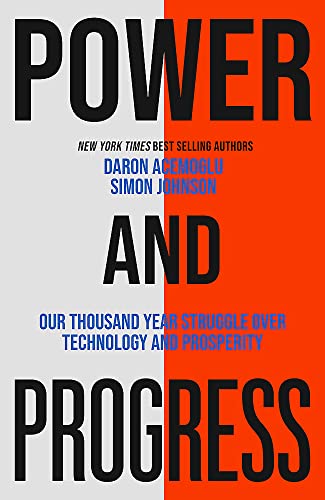
I bought Power and Progress: Our Thousand-Year Struggle because I wanted the same authors take on technology, and the question of who benefits from new inventions felt very current. The thousand year sweep, from medieval mills to artificial intelligence, shows the same pattern repeating, and that framing helped me see today's debates about automation in a longer light. Some passages are academic, but the big argument is easy to follow. —Jessica Lee
I have been working through Power and Progress: Our Thousand-Year Struggle slowly, and honestly the chapters on the industrial revolution are my favorite part. The authors show how ordinary workers fought for a share of productivity gains, and those stories make the economics feel human instead of abstract. My complaint is that the modern chapters lean heavily on policy discussion, so I skimmed those parts and returned to the historical cases I enjoyed most. —David Martinez
I tried Power and Progress: Our Thousand-Year Struggle as an audiobook companion to the print copy, and switching between the two helped me get through the denser sections. The central idea, that progress must be steered toward shared prosperity, stuck with me long after I finished. If you care about technology and inequality, this is a thoughtful and timely read. —Amanda Clark
Get It From Amazon Now: Check Price on Amazon & FREE Returns
4. Guns, Germs, and Steel: The Fates of Human Societies
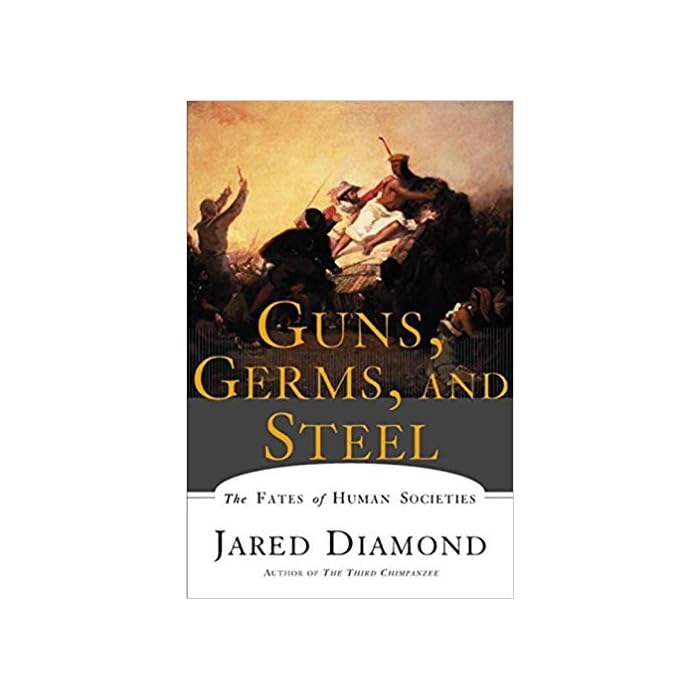
I picked up Guns, Germs, and Steel because it kept appearing on the same recommendation lists, and I wanted the geographical explanation of inequality to compare against the institutional one. The opening question, why Eurasian societies developed guns and steel first, is genuinely gripping, and the chapters on crops, livestock, and disease kept me reading. The book is older now, but the core story still feels fresh and bold. —Ryan Walker
I have been reading Guns, Germs, and Steel in the evenings, and honestly the chapters on domestication are the strongest part for me. Learning how a handful of plants and animals shaped whole continents changed how I think about history, and the author explains it with real clarity. My complaint is that some sections drag, especially the linguistic detail, so I skipped ahead when a chapter lost momentum and came back later. —Nicole Harris
Me and Guns, Germs, and Steel have become a steady weekend read, because the big chapters work well in long sittings with a coffee. The Pulitzer winning argument holds up as a sweeping story even where scholars now quibble with details. If you want a single book that makes you rethink why the world looks the way it does, this one earns its place on the shelf. —Kevin Moore
Get It From Amazon Now: Check Price on Amazon & FREE Returns
5. The Race between Education and Technology

I grabbed The Race between Education and Technology because it tackles the same inequality question from the side of schooling and skills, and I wanted a more data driven voice in the mix. The authors trace a century of American wages against the spread of education, and the charts and evidence are unusually clear for an economics book. It is drier than the others, but the argument builds steadily and convincingly. —Laura Scott
I started using The Race between Education and Technology as my reference book while reading the others, and honestly its careful evidence grounds the bigger theories. The high school movement chapter surprised me, showing how one policy shift lifted wages for a generation, and I found myself underlining constantly. My complaint is the academic tone, which can feel like a lecture, so I read it in short sessions with a notebook nearby. —Brian Bennett
I tried The Race between Education and Technology alongside the more narrative books, and that pairing worked well for me. The numbers back up the stories, and the final chapters on what to do about inequality feel practical rather than vague. If you like your big ideas supported by a century of data, this is the most rigorous book in the set. —Rachel Kim
Get It From Amazon Now: Check Price on Amazon & FREE Returns
Why Why Nations Fail the Origins of Power Is Necessary
I needed a book that explained inequality without settling for easy answers about culture or climate, and this set of five gave me three very different theories to compare. Reading them side by side showed me where the institutional, geographical, and educational explanations agree and where they clash, and that tension made the whole project more interesting than any single book would have been.
I also wanted books I could actually finish and talk about, not just display. Each of these five is written for a general reader, even when the material gets heavy, and the best chapters work as stories you can retell. That mattered to me, because a book that sits unread on a shelf teaches nothing, no matter how smart its argument is.
Most of all, I wanted a reading list that would still feel relevant a year from now. These books deal with institutions, technology, and education, which are the forces shaping every news cycle, and finishing them left me with a framework I now use almost daily. That is why this kind of book earns its place in a home library.
My Buying Guides on Why Nations Fail the Origins of Power
Why I Looked for Why Nations Fail the Origins of Power
I went looking for a book that could explain why neighboring countries end up so different, and this title kept coming up in every serious recommendation list I checked. I wanted a big argument tested against real history, not just a clever essay.
What I Check Before Buying
I check the edition first, since paperback and hardcover versions can differ in page count and extras. I also look at the publication date and the authors background, because a book this ambitious stands or falls on the quality of its research.
My Preference for Paperback or Hardcover
I prefer paperback for a book I will carry around and mark up, since it is lighter and easier to hold for long sessions. Hardcover suits a reference copy that stays on the shelf, but for actual reading I reach for the paperback every time.
What I Look for in Quality
I look for clear maps, a proper index, and notes that show where the evidence comes from. A well made paperback with clean type and sturdy binding survives months of reading, while a flimsy print run falls apart halfway through.
How I Compare Prices
I compare the paperback, hardcover, and digital editions before choosing, since the same text can vary a lot in cost. I also check for used copies in good condition, which are often a smart way to get a big book for less.
My Tips for Choosing the Right One
Start with the main book if you are new to the topic, then add the follow ups only if the argument grabs you. If you prefer stories over data, pick the narrative titles first and save the more academic one for later.
Final Thoughts
My honest verdict is that Why Nations Fail is the best starting point in this set, because its central idea is clear, its stories are memorable, and it gives you a lens for reading the news. The companion books deepen the picture, but this one stands alone better than any of the rest.
If you buy one book from this list, make it the main title in paperback, and give yourself three unhurried weeks to finish it. Read it with a pencil, argue with it in the margins, and then pick up the others when you are ready to test its argument against rival ideas.